
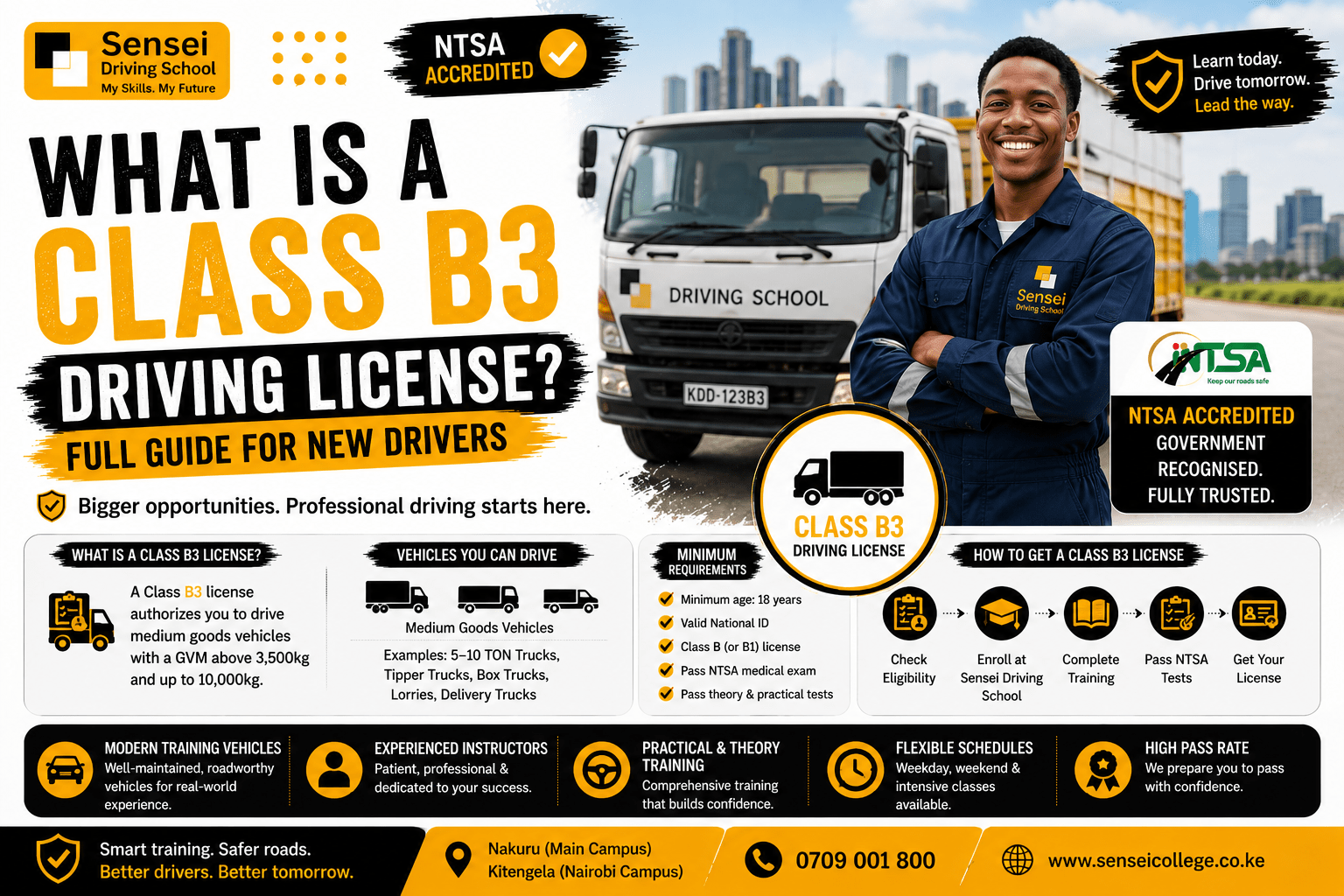
What Is Class B3?
Class B3 is one of the most misunderstood and most underappreciated license categories in Kenya. It is not just a driving license; it is a professional certification for executive drivers.
Who Needs Class B3?
- Corporate chauffeurs driving CEOs, directors, and executives
- Hotel courtesy drivers; luxury hotel shuttles
- Diplomatic and Embassy vehicle drivers
- VIP and celebrity transport professionals
- Premium taxi and luxury ride-hailing drivers, e.g., driving a Mercedes E-Class on a high-end platform
- Security-trained executive protection drivers
What Does B3 Training Include at Sensei?
Beyond standard driving, Class B3 at Sensei College covers:
1. Advanced Driving Techniques:
- Defensive driving and collision avoidance
- High-speed vehicle control
- Driving in adverse weather and poor visibility conditions
- Anti-surveillance driving techniques for security roles
2. Professional Conduct:
- Executive etiquette and client confidentiality
- Dress code and grooming standards for professional chauffeurs
- Communication with corporate clients
- Discretion and professional boundaries
3. Vehicle Management:
- Pre-trip vehicle inspection for executive vehicles
- Luxury vehicle controls and features (Mercedes, BMW, Land Cruiser VX, etc.)
- Fuel management and route optimization
4. Emergency Preparedness:
- First aid basics for drivers
- Emergency evacuation procedures
- What to do during vehicle breakdowns with VIP passengers
B3 Income Potential
Class B3 certified chauffeurs are among the highest-paid non-commercial drivers in Kenya:
| Employer Type | Monthly Salary (KSh) |
| Corporate company chauffeur | 60,000 – 120,000 |
| Embassy/diplomatic driver | 80,000 – 180,000 |
| Luxury taxi/VIP transport operator | 80,000 – 200,000 (own business) 80,000 – 200,000 (own business) |
| Hotel courtesy driver (5-star) | 50,000 – 90,000 |
Course Duration: 6–8 weeks at Sensei College
Frequently Asked Questions on B3
1. What is a Class B3 driving license in Kenya?
A Class B3 license allows you to drive light passenger vehicles such as taxis, ride-hailing cars (Uber/Bolt), and small vans carrying passengers for hire. It is mainly meant for commercial passenger transport using vehicles with a limited seating capacity.
2. What is the difference between Class B1, B2, and B3?
- B1 – Private cars (non-commercial use)
- B2 – Light commercial vehicles for carrying goods
- B3 – Light passenger vehicles for carrying paying passengers
B3 is specifically for transporting people for business purposes.
3. Can I use a Class B3 license for ride-hailing jobs like Uber or Bolt?
Yes. A Class B3 license is commonly required for ride-hailing services like Uber and Bolt in Kenya because it permits you to carry passengers for hire legally.
Conclusion
With urban areas continuing to expand and the demand for reliable transport increasing, B3 drivers are becoming more valuable than ever. By getting proper training, understanding road safety, and offering good customer service, you can build a stable and rewarding career.