
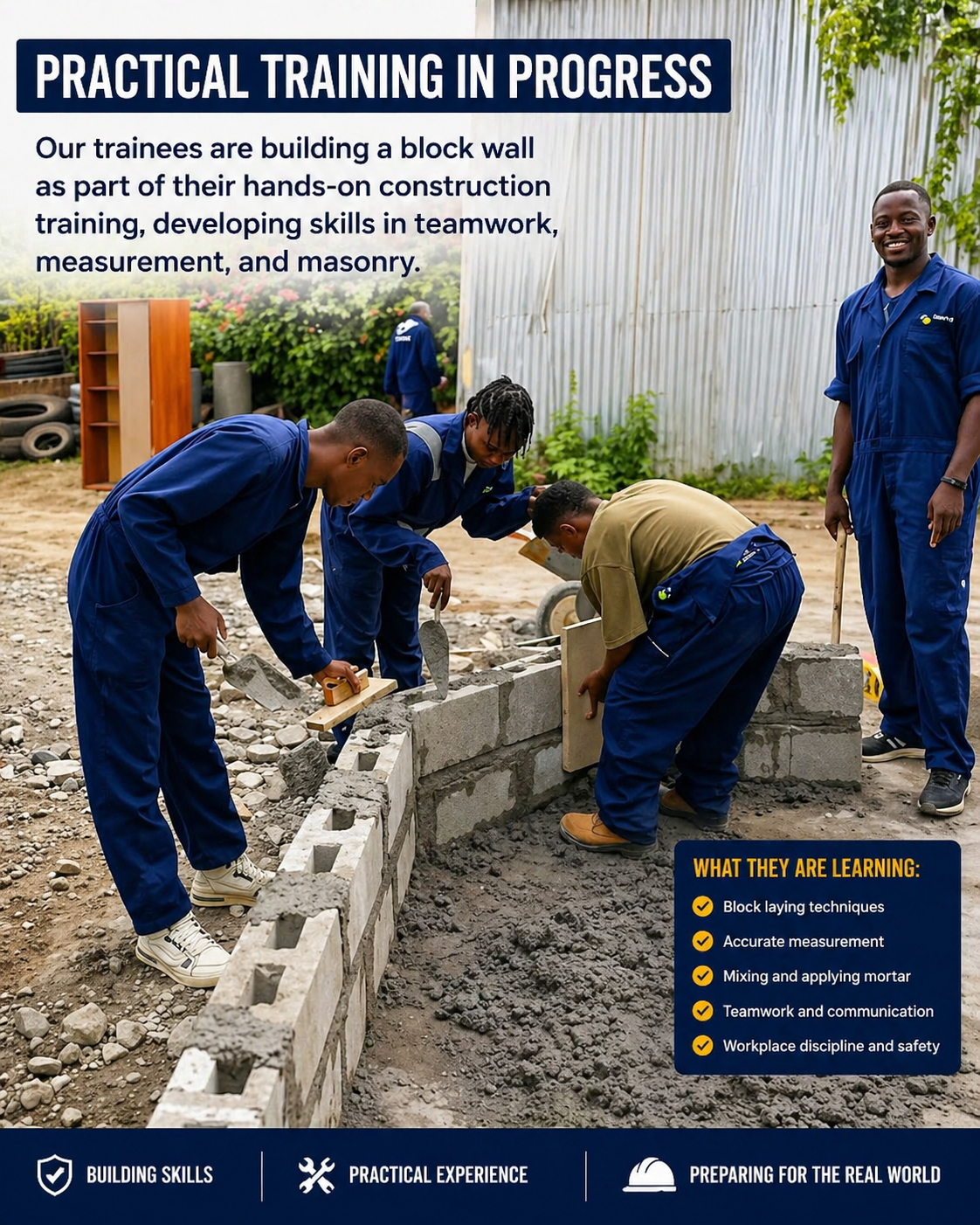
Kenya is experiencing a major infrastructure boom, with large-scale projects transforming roads, railways, housing, and energy systems across the country. From highway expansions to modern housing developments, the demand for skilled workers in the construction industry has never been higher.
However, not all skills are equal in today’s job market. Employers are increasingly looking for professionals who bring specialized, practical expertise that can keep projects running efficiently and safely.
In this article, I’ll explore the top 5 construction skills that are shaping Kenya’s biggest infrastructure projects, and how you can position yourself to take advantage of these opportunities
The State of Kenya’s Construction Industry
Kenya’s construction sector grew by 8.3% in 2024 and continues on an upward trajectory in 2026, driven by:
- Government Big Four Agenda: Affordable housing (200,000+ units per year target), manufacturing, and infrastructure.
- Lamu Port- South Sudan- Ethiopia Transport Corridor (LAPSSET) Corridor: Kenya’s largest infrastructure project, spanning roads, pipelines, railways, and a new port at Lamu
- Nairobi Metropolitan Services: Road upgrades, sewer systems, and public facilities across Nairobi
- Private real estate: Residential apartments, malls, office parks, and hotels
- Energy infrastructure: Geothermal, wind, solar, and hydroelectric projects
Though we have all these projects, we still don’t have enough qualified, certified, skilled workers.
Marketable Skills Available
-
Masonry and Concrete Technology
Masonry covers brickwork, blockwork, stone construction, plastering, screeding, and concrete placement.
Concrete technology specifically deals with mixing, pouring, compacting, and finishing concrete structures, from foundations to bridges.
Every single building in Kenya starts with a foundation and masonry work. Affordable housing projects require thousands of skilled masons. Infrastructure projects need certified concrete technicians who understand reinforcement, curing, and quality testing.
Earning Potential
- Junior mason (1–2 years): KES 1,200–2,000/day
- Senior mason (5+ years): KES 2,500–4,000/day
- Concrete technician (certified): KES 40,000–80,000/month on major projects
- Sub-contractor (running your own gang): KES 80,000–250,000/month
How to Get Certified
- Certificate in Building Technology at any TVET college: 1–2 years
- NITA Trade Test in Masonry: Grade III to Grade I
- NCA (National Construction Authority) worker registration is required for all construction workers on formal sites
-
Electrical Installation – High Voltage and Industrial
Electrical installation in construction goes beyond household wiring. It includes industrial power systems, three-phase wiring, street lighting, fire alarm systems, data cabling, and building management systems (BMS). High-voltage electrical work is needed for transmission lines, substations, and large commercial installations.
Kenya Power’s grid expansion, new commercial buildings, industrial parks, and renewable energy projects all require certified electricians. The Kenya Electricity Expansion Project alone is creating thousands of electrical jobs through 2030.
Earning Potential
- Electrical journeyman (grade III): KES 30,000–50,000/month
- Certified electrician (grade I): KES 50,000–100,000/month
- High voltage specialist: KES 80,000–180,000/month
- Self-employed contractor: KES 100,000–400,000/month (with contracts)
How to Get Certified
- Certificate in Electrical and Electronic Technology: 1–3 years
- NITA Trade Test in Electrical Installation
- Energy Regulatory Commission (ERC) / EPRA Contractor licence for commercial work
- NCA contractor registration for building projects
3. Plumbing and Piping Engineering
Plumbing in construction covers water supply systems, drainage and waste systems, gas piping, fire suppression systems, and industrial process piping. High-end plumbing includes working with copper, steel, HDPE, and CPVC piping systems in commercial and industrial buildings.
Kenya’s affordable housing programme and commercial real estate boom require thousands of plumbers. The Nairobi Sewerage expansion project, Mombasa urban water systems, and county-level water projects are creating additional demand. Plumbers willing to work outside Nairobi have even better prospects.
Earning Potential
- Junior plumber: KES 1,000–1,800/day
- Certified plumber: KES 35,000–65,000/month
- Industrial piping specialist: KES 60,000–120,000/month
- Plumbing contractor (own business): KES 80,000–300,000/month
How to Get Certified
- Certificate in Plumbing and Piping: 1–2 years at a TVET college e.g. Sensei College
- NITA Trade Test in Plumbing
- Water Services Regulatory Board (WASREB) plumber licence for water supply work
- NCA worker/contractor registration
4. Welding and Structural Steel Fabrication
Structural welding in construction involves joining steel beams, columns, and frames that form the skeleton of buildings and bridges. It requires precision, knowledge of metal properties, and mastery of techniques including MIG, TIG, SMAW (stick) welding, and gas cutting.
Steel-frame construction is increasingly common in Kenya for commercial and industrial buildings. Bridge construction, railway infrastructure (SGR expansion), and oil and gas pipelines (LAPSSET) all require certified structural welders. International contractors on these projects will only accept certified welders.
Earning Potential
- Junior welder: KES 1,200–2,000/day
- Certified structural welder: KES 40,000–80,000/month
- Coded welder (pipeline, pressure vessels): KES 80,000–200,000/month
- Fabrication business owner: KES 100,000–500,000/month
How to Get Certified
- Certificate in Welding and Fabrication: 1–2 years
- NITA Trade Test in Welding
- AWS (American Welding Society) coded welder qualification – required for international and oil/gas projects
- NCA registration for structural work
5. Plant Operation (Heavy Equipment)
Plant operation encompasses operating earth-moving equipment (excavators, bulldozers, graders), lifting equipment (cranes, hoists), compaction equipment (rollers, compactors), and material handling equipment (forklifts, reach stackers). These machines are the muscle of every major infrastructure project.
Every road, dam, railway, and housing project in Kenya starts with earthworks. LAPSSET alone requires hundreds of excavators, graders, and bulldozer operators. The Affordable Housing Programme needs crane operators for high-rise construction. Yet Kenya faces a persistent shortage of certified operators.
Earning Potential
- Excavator/bulldozer operator: KES 45,000–90,000/month
- Crane operator: KES 70,000–150,000/month
- Plant operator supervisor: KES 80,000–180,000/month
- International deployment (Gulf, South Africa): USD 800–2,500/month
How to Get Certified
- Certificate in Plant Operation: 6 months to 2 years
- NITA Trade Test in Plant Operation
- DOSHS operator licence for cranes, hoists, and pressure vessels
- NTSA driving licence for road-going heavy equipment
Skills That Make Any Construction Worker Valuable
- AutoCAD and construction drawing reading – KES 5,000–10,000 short course, adds 20–30% to your salary
- Construction project management basics – useful for supervisory roles
- Occupational First Aid -required on most formal construction sites
- Basic computer literacy – for writing reports and using site management apps
- English proficiency – essential for working with international contractors
How to Access Construction Jobs in Kenya in 2026
- Register with NCA (National Construction Authority) as a worker or contractor – mandatory for formal sites
- Create a profile on construction job platforms: BuildNet Kenya, LinkedIn, MyJobMag
- Visit construction sites directly – many supervisors hire qualified workers on the spot
- Join the Kenya National Federation of Jua Kali Associations – a network connecting artisans to projects
- Target county government tenders – they have local content requirements favouring county residents
- Position yourself for international projects: China Wu Yi, Strabag, Raubex regularly recruit in Kenya
Frequently Asked Questions
1. Which construction skill has the highest salary in Kenya?
Crane operation and high-voltage electrical work consistently offer the highest salaries. Coded pipeline welding is also exceptionally well paid. All three require significant training and certification investment.
2. Can I get a construction job in another African country with Kenyan certification?
Yes. Rwanda, Uganda, Tanzania, Ethiopia, and South Africa all hire Kenyan construction workers. NITA and NCA credentials are recognised across East Africa. International certifications (AWS welding, NPORS plant operation) further expand your options.
3. How long does it take to become employment-ready in a construction trade?
6 months for a basic certificate and Grade III trade test. 2 years for a full diploma with Grade I certification. After your first 6 months, you can begin earning while still training.
4. Is there a housing allowance or site allowance on big projects?
Yes. Projects in remote areas like LAPSSET and LAPFUND corridors typically provide accommodation, meals, and transport, in addition to salary. This effectively doubles your saving potential.
Conclusion
Kenya is constructing its future in concrete, steel, and cable and every project needs the hands, minds, and machines of skilled Kenyan workers. The infrastructure is being built. The only question is: will you build it or watch someone else do it?
Sensei College offers all five trades covered in this article. Enroll today and be part of the community building the future