
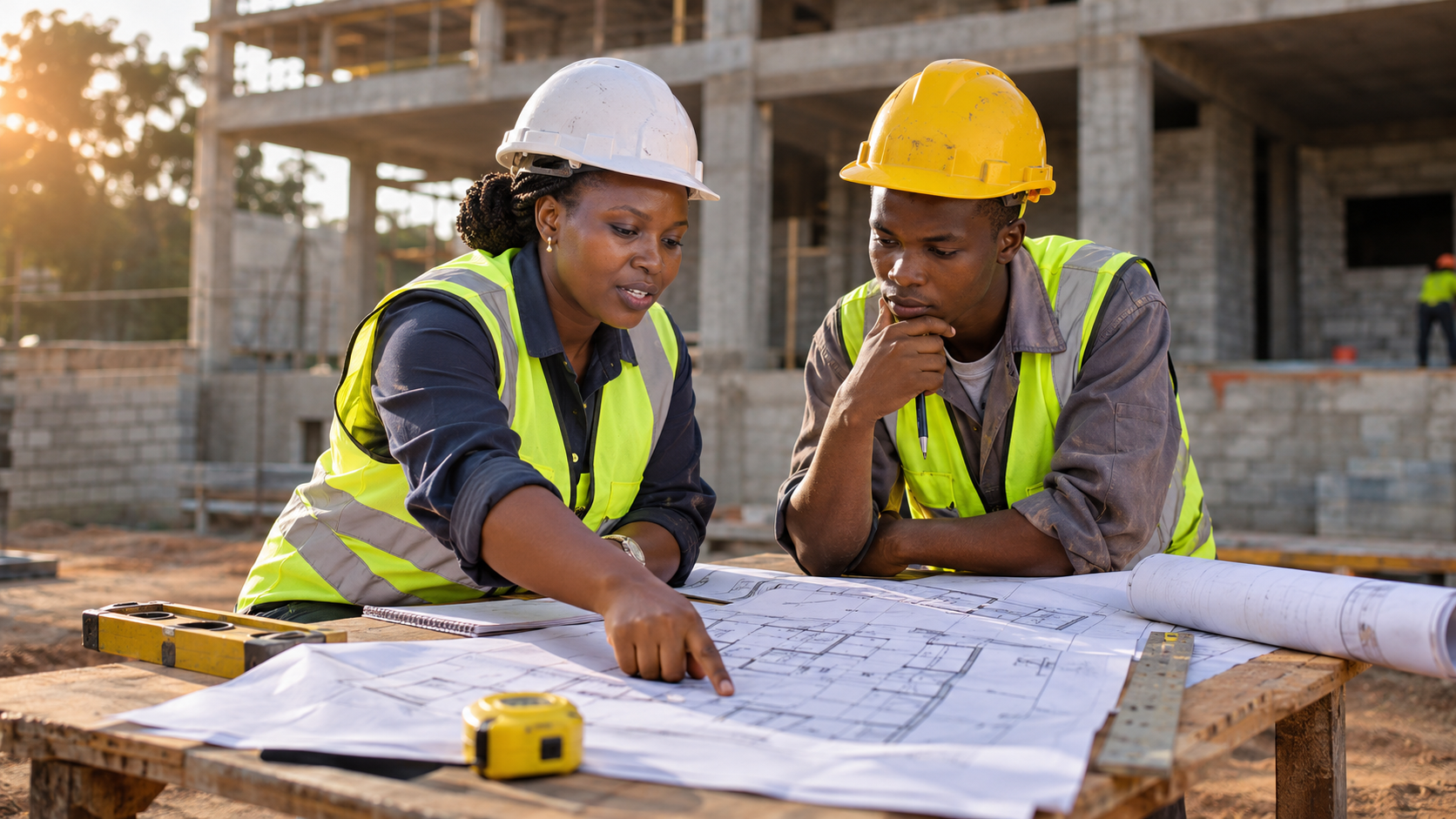
Imagine you walk into a half-finished building to buy meat for dinner. The butcher’s fridge hums. A hammer rings out somewhere overhead. You step around a patch of dust, check your phone and look up to see if it’s your turn. You’ll be home soon.
On 9th Street in Eastleigh, Nairobi, that could have been an ordinary Friday errand. Shops were open in the basement and on the ground floor of an 18-storey building while crews worked upstairs. On the afternoon of 23 October 2026, the building gave way. Associated Press
The collapse was horrifying and surreal. The floors drop in quick succession, flattening into layers of concrete. One minute the towering skeleton of an 18-storey building, the next, a grey cloud pouring across the street, swallowing the view of the buildings opposite. People scream and run. Others hold up their phones to record what’s left. K24 Digital · Reuters Connect
Then comes the question that makes the footage so hard to watch. Was anyone still inside?
The search beneath the rubble
Joseph Kaula was plastering on the fifth floor when he heard screams. He felt the building shake and was among the last workers to get out. Others were trapped. Some called their families from beneath the rubble. Later, relatives tried calling back and couldn’t get through. Daily Nation · Associated Press
Rescue crews brought in search dogs and heavy machinery. They worked through layers of concrete and steel, searching the basement spaces below. When authorities ended the search on 6 November, four people had been rescued alive, eight bodies had been recovered and three people were still missing. Reuters Connect · Citizen Digital
The argument over who approved it
While families were still waiting for news, the collapse became a political fight. Embakasi East MP Babu Owino shared a document he said showed City Hall had approved the development. Governor Johnson Sakaja disputed it. He said the county had agreed that the land could be used for homes and businesses, but had never approved the building plans. He also said the building lacked the certificate required before people could use it. The Standard · Associated Press
In November, a county official told an assembly committee that documents used to register the project may have been forged. That allegation raises questions about who checked the paperwork. What physically made the building give way remained unresolved in the reporting on the hearing. Daily Nation
Where safety broke down
If this story makes you uneasy about walking into a shop beneath an active construction site, that’s understandable. It must have been frightening to feel the floor shake in the middle of a shift, or to wait for news of someone who had gone out on an ordinary errand.
The clearest failure was letting the public use the building before it had been cleared for use. You shouldn’t have to ask to see an inspection report before you buy dinner. That responsibility belongs to the people who build, supervise and inspect the site. Workers also need a clear way to raise a concern and a supervisor who will stop work long enough to check it.
Learn a construction trade at Sensei College
If you’re interested in the work that goes into putting up a building, with safety in mind, Sensei College offers hands-on training in Kitengela and Nakuru. Its course page lists:
- Building Construction Technology with ArchiCAD (Standard) — 6 months at KSh 25,000 per month
- Concrete Technology — 3 months at KSh 25,000 per month
- Steel Fixing — 3 months at KSh 20,000 per month
- Scaffolding — 3 months at KSh 30,000 per month
Day and boarding options are available, with intakes in the first week of each month. Compare courses and apply at Sensei College
Sensei College
My Skills, My Future