
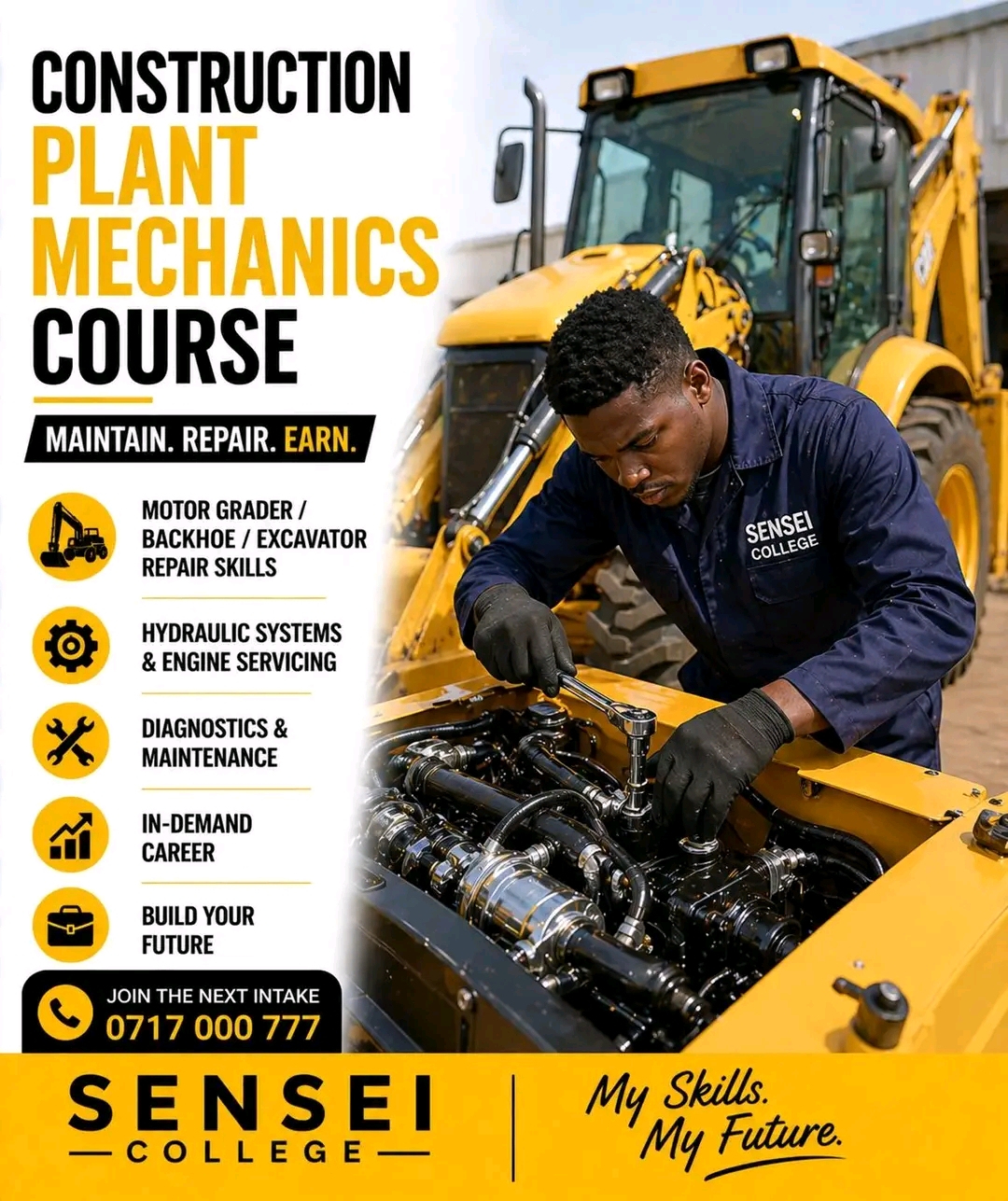
Heavy machinery mechanics are among the highest-paid technical workers in Kenya. They keep the engines of the economy running literally. Without plant mechanics, road construction stops, mines shut down, factories go dark, and buildings cannot rise. If you want a career that is always in demand, pays well, and can take you beyond Kenya’s borders, the heavy machinery mechanics training at Sensei College is the right choice.
In this guide, you will learn exactly what the course covers, why plant mechanics earn more than most technicians, the business opportunities available, and how to launch your career in Kenya’s booming construction and mining sectors.
What Is Construction Plant Mechanics?
Construction Plant Mechanics, also known as heavy equipment mechanics or plant fitters, are trained specialists who repair, service, and maintain large industrial machines used in construction, mining, road building, and material handling.
Types of Machines You Will Work On
- Excavators -used for digging foundations, trenches, and earthworks
- Bulldozers – used to push large quantities of soil, sand, and rubble
- Motor Graders – used to level and grade roads and construction sites
- Wheel Loaders – used to scoop and transport materials like sand and gravel
- Dump Trucks and Tipper Lorries -for transporting heavy loads on construction sites
- Compactors and Rollers – used to compact soil and lay tarmac roads
- Tower Cranes and Mobile Cranes – for lifting heavy materials in construction
- Generators – for providing backup or primary power to sites and industries
- Forklifts – used in warehouses and ports for lifting and moving loads
A heavy machinery mechanic is responsible for diagnosing faults, carrying out preventive maintenance, replacing worn parts, and ensuring every machine is safe and operational. It is a role that requires both technical knowledge and practical problem-solving skills.
Construction Plant Mechanics Training
The construction plant mechanics course at Sensei College is a comprehensive, hands-on program designed to transform complete beginners into job-ready heavy equipment technicians. You do not need to have worked on machines before, the course starts from the basics and builds your skills step by step.
Training is practical; you work on real heavy equipment, use professional tools, and practice the actual maintenance and repair tasks that employers and clients need done.
Key Skills You Will Learn
- Engine systems: how diesel engines in heavy machines work and how to service them
- Hydraulic systems: understanding the hydraulics that power excavator arms, loader buckets, and bulldozer blades
- Transmission and drivetrain: servicing gearboxes, axles, and drive systems
- Electrical and electronic systems: diagnosing faults using modern diagnostic tools
- Preventive maintenance: following service schedules to prevent breakdowns
- Fault diagnosis: identifying problems quickly and accurately
- Welding and fabrication basics relevant to plant repair
- Generator systems: installation, servicing, and repair
- Safety and health regulations on construction and mining sites
Students also gain exposure to machine operation; understanding how to operate the equipment they will be maintaining. This versatility makes them far more valuable to employers, as they understand the machine from the operator’s perspective as well as the mechanic’s.
Why Heavy Machinery Mechanics Earn More Than Light Vehicle Mechanics
-
Complexity of the Machines
A car engine is simple compared to a 20-tonne excavator with hydraulic systems, electronic control units, and complex drivetrain components. The more complex and specialized the skill, the higher the pay. Employers know that finding a qualified heavy equipment repair technician in Kenya is not easy, and they pay accordingly.
-
High Value of the Equipment
A single excavator or bulldozer can cost between KES 5 million and KES 50 million. When that machine breaks down on a construction site, every idle hour costs the company money. A plant mechanic who can fix it quickly is worth every shilling they are paid.
-
Industry Demand
Construction, mining, road building, port operations, and agriculture all rely on heavy machinery. With Kenya’s infrastructure expansion, the SGR, new highways, affordable housing projects, and mining activity in counties like Kwale, Taita Taveta, and Turkana, the demand for heavy equipment mechanics in Kenya has never been higher.
- Light vehicle mechanic: KES 15,000 – 35,000 per month
- Experienced heavy machinery mechanic: KES 60,000 – 150,000+ per month
- Plant mechanic in the Middle East or Gulf: KES 150,000 – 300,000+ equivalent per month
The Business of Heavy Machinery Spare Parts in Kenya
One of the most overlooked but highly profitable opportunities after completing a plant mechanics course is the spare parts business. If you understand heavy machinery, you know exactly which parts fail, how often they fail, and what contractors urgently need.
Heavy machinery spare parts are expensive and not always easy to find in Kenya. Contractors cannot afford to wait weeks for parts to arrive from abroad. A local supplier who stocks commonly needed parts: filters, seals, hydraulic hoses, belts, bearings, and engine components, can charge premium prices because of the urgency and scarcity.
How to Get Started in the Spare Parts Business
- Use your training to identify the most commonly replaced parts for popular machine brands
- Source parts from established importers in Nairobi’s Industrial Area or through international suppliers
- Build relationships with construction companies and contractors as your regular clients
- Start small, focus on filters, seals, belts, and hydraulic components before moving to expensive engine parts
- Combine your repair services with parts supply for maximum income
Your knowledge of machines will be your greatest competitive advantage in the business. One can even focus on both
The spare parts business in Kenya can generate between KES 50,000 and KES 250,000+ per month once established, particularly if you build a loyal client base among construction and road contractors.
Generator Repair and Maintenance
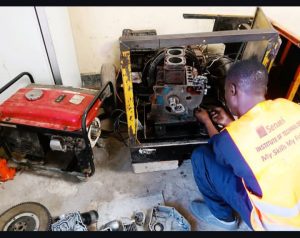
Kenya experiences frequent power interruptions, particularly in upcountry areas and during the rainy season. As a result, generators are everywhere: in hospitals, hotels, schools, factories, petrol stations, supermarkets, and residential estates. Every one of those generators needs regular servicing and occasional repairs.
The generator repair course component prepares you to service and repair both small standby generators and large industrial generator sets.
Skills You Will Gain in Generator Training
- Understanding generator components: engines, alternators, control panels, and automatic transfer switches
- Routine servicing: oil changes, filter replacements, coolant top-ups, and load testing
- Fault diagnosis: identifying engine faults, alternator problems, and electrical failures
- Repair work: fixing common generator problems, including starting failures and output issues
- Installation of new generator systems for homes and businesses
Generator Repair as a Business
Starting a generator repair and servicing business in Kenya requires very little capital compared to other businesses. You need your tools, some spare parts stock, and a reliable means of transport.
Many generator technicians work on a mobile basis, visiting clients at their premises, which means zero rent cost.
A generator technician servicing 10 to 15 clients per month can earn between KES 40,000 and KES 80,000 in service fees alone, and one can focus on spares and parts.
How to Secure a Job in Mining and Construction After Training
Mining equipment mechanic jobs in Kenya are among the most competitive and best-paying positions in the technical sector. Companies like Base Titanium, Bamburi Cement, various road construction firms, and international contractors operating in Kenya all need qualified plant mechanics.
What Employers Look For
- Proof of practical training on recognized heavy machinery
- Knowledge of hydraulic, electrical, and mechanical systems
- Ability to work independently and diagnose problems quickly
- Health and safety awareness for industrial environments
- Willingness to work on-site, including remote locations
When you are starting out, your goal is to gain real site experience. Here are the most effective ways to break into road construction jobs in Kenya and the mining sector:
- Apply to construction companies for an apprentice or junior mechanic role, experience matters more than salary at this stage
- Target road construction contractors working on government projects across Kenya
- Offer your services to plant hire companies that rent out machinery and need in-house mechanics
- Network with site managers, supervisors, and fellow mechanics many jobs in this industry come through referrals
- Keep your training certificate updated and consider additional certifications in specific brands like Caterpillar, Komatsu, or JCB
Mechanics who earn the most are those who can handle multiple systems: engines, hydraulics, electrical, and welding. Sensei College’s training covers all these areas, making you a versatile technician that any employer would want to hire and retain.
Career Opportunities and What to Expect in 2026
Heavy equipment repair training in Kenya opens doors across multiple high-paying industries. Here is a realistic overview of what you can expect to earn as you build your career:
| Role/sector | Monthly Earnings (KES) |
| Entry-Level Plant Mechanic | 30,000 – 50,000 |
| Entry-Level Plant Mechanic | 60,000 – 120,000 |
| Experienced Plant Mechanic (Kenya) | 80,000 – 150,000 |
| Mining Equipment Mechanic | 40,000 – 80,000 |
| Generator Repair Technician | 150,000 – 300,000+ |
| Spare Parts Business Owner | 50,000 – 250,000+ |
Construction Sector
Every large construction project needs plant mechanics on-site. Entry-level positions start at KES 30,000 but experienced mechanics with site supervisory skills can earn over KES 120,000 per month.
Mining Sector
Mining equipment mechanic jobs in Kenya are based in counties like Kwale (titanium mining), Taita Taveta, and Turkana.
Transport and Logistics
Companies operating large fleets of heavy trucks, tankers, and trailers need in-house mechanics. Logistics hubs like Nairobi, Mombasa port, and Eldoret all have strong demand for heavy equipment technicians.
International Opportunities
Kenyan heavy machinery mechanics are increasingly finding employment in the Middle East, particularly in Saudi Arabia, UAE, Qatar, and Kuwait, where major construction projects are always underway. With experience and the right certifications, monthly earnings equivalent to KES 150,000 to 300,000 are realistic.
Why Choose Sensei College for Your Plant Mechanics Training?
There are many training institutions in Kenya offering technical courses. Here is what makes Sensei College the right choice for aspiring heavy machinery mechanics:
-
Real Hands-On Training
You will not graduate from Sensei College having only studied theory. The program puts you on actual machines, using real tools, performing actual maintenance and repair tasks. This is the kind of training employers respect and recognize.
-
Industry-Relevant Curriculum
The Sensei College construction plant mechanics course is designed to match the actual requirements of Kenya’s construction, mining, and industrial sectors. What you learn is what companies and contractors actually need done on their sites.
- Complete Skill Set
By covering engines, hydraulics, electrical systems, generators, and basic operation, Sensei College graduates are versatile mechanics who can handle multiple machine types. This versatility directly translates to higher employability and higher pay.
Beyond technical skills, Sensei College prepares you for the real world — whether that means writing a strong job application, approaching contractors for work, or setting up your own repair business or spare parts supply operation.
Frequently Asked Questions (FAQs)
1. How much does a plant mechanics course cost in Kenya?
Prices vary depending on the institution and your area of specialization
2. How long does the construction plant mechanics training take?
The duration depends on the specific program level you enroll in. Short intensive courses can be completed in 3 to 6 months. More comprehensive programs may take longer.
3. Is heavy machinery mechanics a good career in Kenya?
Absolutely. It is one of the highest-paying technical careers in Kenya. With the government’s continued investment in infrastructure: roads, housing, and industrial development, demand for plant mechanics is growing every year. Experienced mechanics can earn KES 60,000 to over KES 150,000 per month in Kenya, and significantly more if working internationally.
4. Can I work in mining after completing the course?
Yes. Mining is one of the primary industries that hires construction plant mechanics. Companies in Kwale, Taita Taveta, Turkana, and other mining regions regularly seek qualified heavy equipment technicians. Your Sensei College training will give you the practical foundation required to apply for mining mechanic positions.
5. How to become a heavy machinery mechanic with no experience?
You start with a practical training program like the one offered at Sensei College. No prior experience is required to enroll; the course is designed for beginners. After completing training, you begin your career by taking an entry-level or apprentice position to gain site experience, and then progress to higher-paying roles as your expertise grows.
6. Can I start a spare parts business after the course?
Yes, your technical knowledge of heavy machinery is a massive advantage in the spare parts business. You understand which parts fail, which brands are common in Kenya, and what contractors urgently need. This knowledge lets you start and run a profitable spare parts supply business even with modest starting capital.
7. Are there international job opportunities for plant mechanics trained in Kenya?
Yes. Kenyan heavy machinery mechanics are finding well-paid employment in the Middle East, particularly in the UAE, Saudi Arabia, Qatar, and Kuwait. These countries have large ongoing construction and infrastructure projects that require skilled plant mechanics. International positions typically offer salaries significantly higher than equivalent roles in Kenya.
Conclusion
Construction and infrastructure are the backbone of Kenya’s growth. Every road that gets built, every building that rises, every mine that operates all depend on heavy machinery. And all the machinery depends on skilled, trained plant mechanics.
A practical plant mechanics course is an industry-recognized pathway into one of the highest-paying technical careers available to Kenyans today.
The 2026 intake at Sensei College is open right now. Spaces are limited. Every week you wait is a week another student takes the place that could have been yours.