
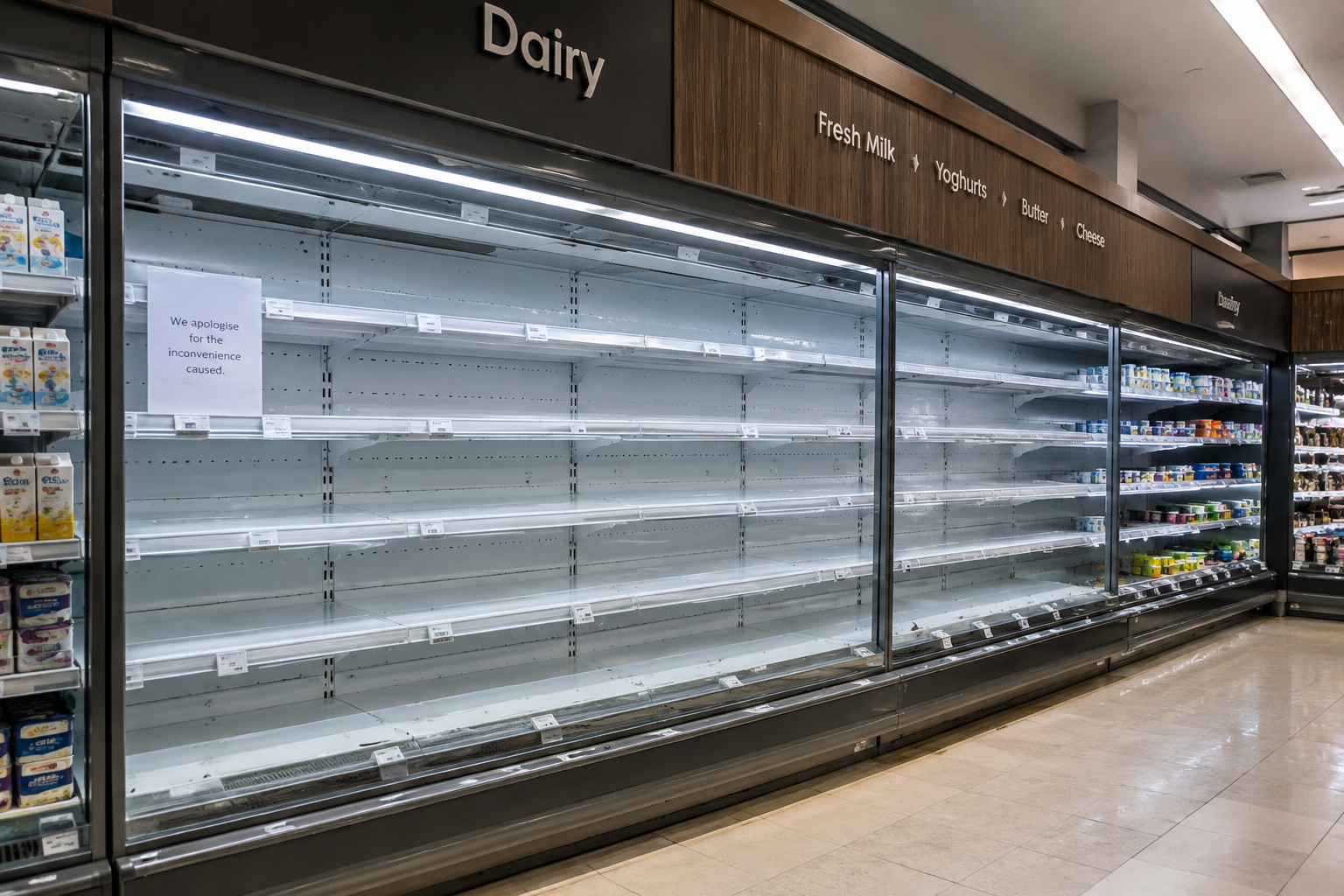
The milk is missing, the cows are hungry, and the rains have been playing hide-and-seek. What’s really happening to Kenya’s dairy industry?
Where Did All the Milk Go?
Imagine walking into your favourite supermarket, heading straight for the dairy section, and finding your usual packet of milk missing.
You check another brand. Nothing.
Suddenly, tomorrow morning’s cup of tea is looking rather uncertain.
For many Kenyans, this became a familiar experience in 2026. But how does a country with one of Africa’s largest dairy industries struggle to keep milk on supermarket shelves?
The answer might surprise you. To understand the milk shortage, we need to talk about grass.
How Did We Get Here?
The warning signs appeared months before supermarket shelves started looking empty.
Milk deliveries to Kenya’s formal processors fell from approximately 88.9 million litres in May 2026 to 75 million litres by August. By August and September, consumers were reporting shortages, with some retailers limiting purchases.
But declining deliveries don’t tell the whole story.
Some farmers were selling milk through informal markets, where brokers sometimes offered better prices than processors. Meanwhile, prolonged dry conditions were affecting pasture availability, forcing farmers to rely on increasingly expensive animal feed.
Kenya’s milk shortage wasn’t caused by one problem. It was several challenges coming together.
And one of the biggest was happening right on the farm.
The Grass-to-Glass Problem
Here’s something we rarely think about while pouring milk into our tea:
A dairy cow needs to eat well to produce milk well.
When rainfall becomes unreliable, pasture deteriorates. Farmers must purchase alternatives such as hay, silage and dairy meal, often at considerable expense.
And when feed becomes scarce or unaffordable, milk production suffers.
It’s a chain reaction:
Less rain → Less pasture → Higher feed costs → Lower milk production → Less milk in shops.
Of course, animal health, water availability and market distribution also affect supply. But nutritious feed remains fundamental.
And when the rains fail, the cows can’t simply wait for the next weather forecast.
Can Better Farming Systems Help Feed the Cows?
This is where things get interesting.
What if farmers could produce livestock feed more reliably, even when rainfall becomes unpredictable?
Hydroponic fodder production allows farmers to grow supplementary green feed in controlled systems, often using trays instead of conventional fields. It can be useful where land is limited, although costs and nutritional value must be considered.
Irrigation systems help farmers grow fodder crops during drier periods, provided reliable water sources are available.
Farm equipment maintenance matters too. From chaff cutters to irrigation pumps, properly maintained tools help farmers prepare feed and avoid costly breakdowns.
None of these is a magical solution. But together with good nutrition and feed conservation, they can make farms more resilient.
And this highlights something important: modern agriculture needs more than farmers. It needs skilled technicians who keep agricultural systems running.
At Sensei College, our agricultural courses include:
- Greenhouse/Hydroponic Maintenance Technician
- Irrigation Installation and Repair Technician
- Farm Tools Repair Technician
These practical skills support the technologies and equipment farmers depend on, creating opportunities for people interested in agriculture beyond traditional farming.
The Rains Are Coming. Problem Solved?
Not quite.
After a delayed and uneven start to the short-rains season, rainfall began improving in parts of Kenya toward November.
On 30 October, the Kenya Dairy Board indicated that milk supplies could begin stabilising within a month if rainfall improved and pastures recovered.
Encouraging news, certainly.
But grass doesn’t grow overnight, and the next dry season is never too far away.
If milk production recovers every rainy season only to struggle during the next drought, have we really solved anything?
Perhaps the bigger challenge is preparing farms before the next shortage arrives.
Before the Milk, There’s the Feed
Kenya’s milk shortage reminds us that what happens on the farm eventually reaches our homes.
An empty supermarket shelf might begin with dry pasture, expensive animal feed or a farmer struggling to maintain production.
The returning rains offer hope. But better feeding systems, water management and practical agricultural skills could help build a more resilient dairy industry.
Because before there’s milk in the packet, there has to be food for the cow.
Interested in the technology behind modern farming?
Explore practical agricultural training at Sensei College.
Sensei College — My Skills, My Future.