
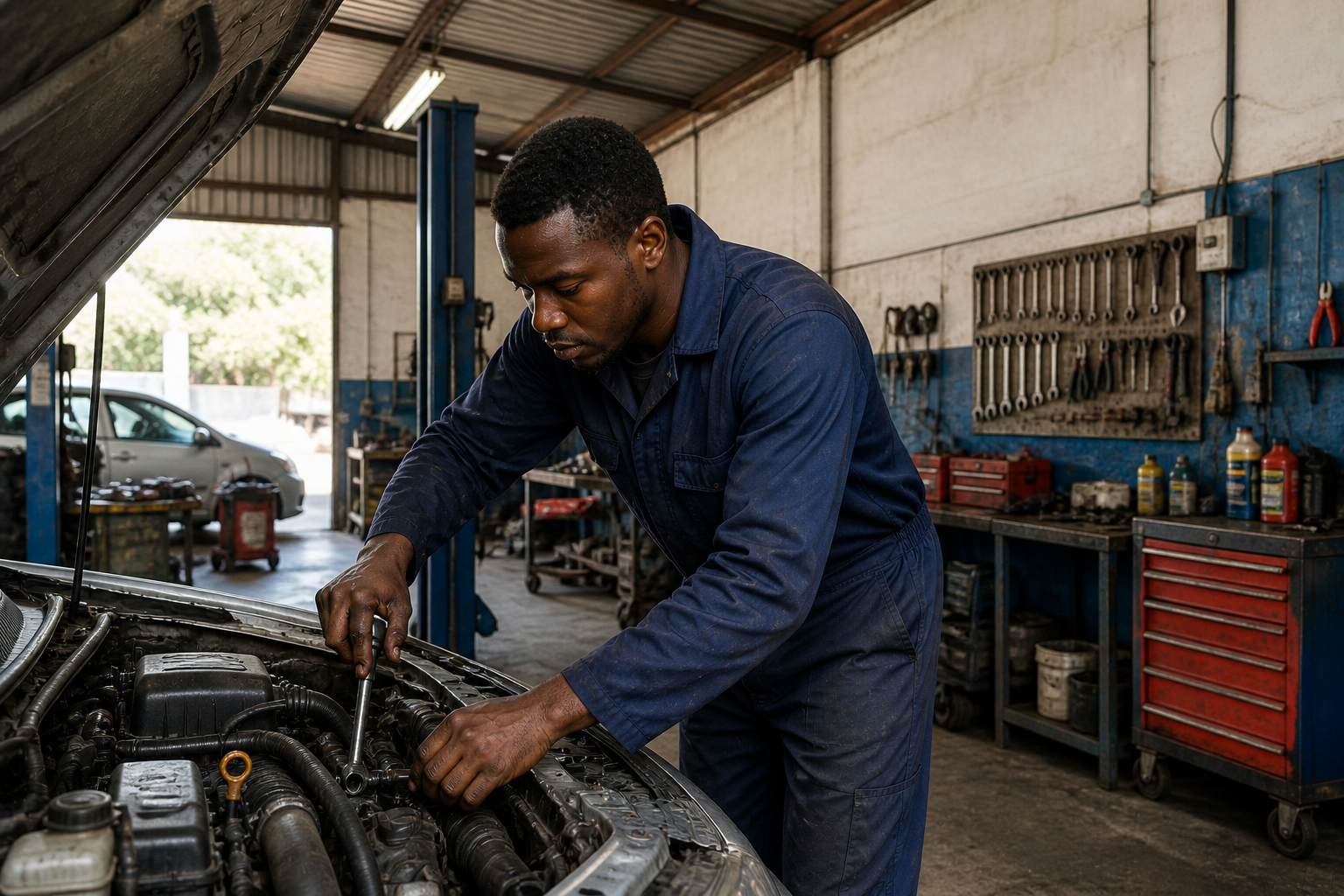
Good automotive mechanics training does more than just teach you to fix cars. It teaches you to understand vehicles at a systems level, communicate with customers about what their vehicle needs, estimate repair costs, source parts efficiently, and build a professional reputation and all skills that a garage owner needs.
Sensei training has given you the skills. This article will help you turn your skills into a business.
Step-by-Step Guide to Starting Your Workshop
Step 1: Choose Your Specialisation
Decide what type of workshop you want to run. Trying to do everything at once is a common mistake for new business owners. It is better to be excellent at one thing than average at many.
- General Motor Vehicle Mechanics: Servicing, repairs, brakes, suspension
- Auto-Electrical: Car electrical systems, alarms, lighting
- Welding and Fabrication: Metal work, gates, grills, bodywork
- Motorcycle Mechanics: Boda boda and motorbike servicing
- Small Engine Repair: Generators, pumps, lawnmowers
Step 2: Find a Good Location
Location can make or break your business. Look for areas with high vehicle traffic, limited competition, and affordable rent. Good options include:
- Near busy roads or main highways
- Close to matatu stages or boda boda stages
- In industrial areas near factories
- In residential estates with many car owners
Walk around the area at different times of day to observe foot traffic and competitor activity before committing to a space.
Step 3: Get the Tools and Equipment You Need
You do not need to buy everything at once. Start with the essentials and add more as your business grows.
Examples of basic tools needed for a mechanic workshop:
| Tool/Equipment | Approximate Cost (KES) | Priority |
| Socket and spanner set | 5,000 – 15,000 | Essential |
| Hydraulic jack and stands | 8,000 – 20,000 | Essential |
| Air compressor | 15,000 – 40,000 | Essential |
| Diagnostic scanner (OBD) | 10,000 – 50,000 | High |
| Grease gun and oil drainer | 3,000 – 8,000 | Essential |
| Workbench and vice | 5,000 – 15,000 | High |
| Welding machine | 20,000 – 60,000 | Optional |
Step 4: Budget and Startup Costs
Many people are put off by the idea of starting a business because they think they need a lot of money. In reality, a modest workshop can be started from as little as KES 50,000 to 150,000, depending on your specialisation and location.
Sample Budget Breakdown:
- Tools and equipment: KES 40,000 – 80,000
- First month’s rent: KES 5,000 – 20,000
- Basic supplies: KES 5,000 – 10,000
- Basic marketing: KES 2,000 – 5,000
- Emergency fund: KES 10,000
Consider applying for a Youth Enterprise Fund loan, a KUSCCO cooperative loan, or savings from your first job to fund your startup.
Step 5: Licensing and Registration
Running a legal business protects you and builds trust with customers. Here is what you need:
- Business Name Registration: Register with the Registrar of Business Names (eCitizen portal). Cost is approximately KES 950.
- Single Business Permit: Obtained from your county government. Costs vary by county and business size.
- NSSF and NHIF Registration: Required if you employ staff.
- Kenya Revenue Authority (KRA) PIN: Essential for tax compliance and official transactions.
A registered business is more likely to win contracts from companies, schools, and government institutions.
Step 6: Market Your Workshop
You can have the best skills in the area, but if nobody knows you exist, you will not get customers. Here are practical and affordable marketing ideas:
- Create a WhatsApp Business profile with your services listed
- Ask friends and family to refer customers and offer them a small referral discount
- Paint a clear, readable signboard outside your workshop
- Join local Facebook community groups and post your services regularly
- Offer a free minor service (like a tyre pressure check) to attract first-time customers
Step 7: Get Your First Customers
Your first customers are the most important. Here is how to attract them quickly:
- Offer introductory pricing for the first month
- Talk to matatu owners, boda boda operators, and company fleet managers in your area
- Do excellent work and ask satisfied customers to recommend you
- Keep a record of customers and follow up when their next service is due
Common Mistakes to Avoid
- Trying to do too much too soon: Focus on your speciality first.
- Not keeping records: Track every job, every expense, and every payment.
- Undercharging: Research market rates and price your work fairly.
- Ignoring quality: One unhappy customer can drive away ten potential ones.
- Using business money for personal expenses: Keep business and personal finances separate from day one.
Conclusion
Starting your own workshop is not just possible for many graduates; it is the smartest career decision they can make.
You are your own boss, you build equity in something that belongs to you, and you create jobs for others in your community.
Start with your training at Sensei College, stay consistent and keep learning,