
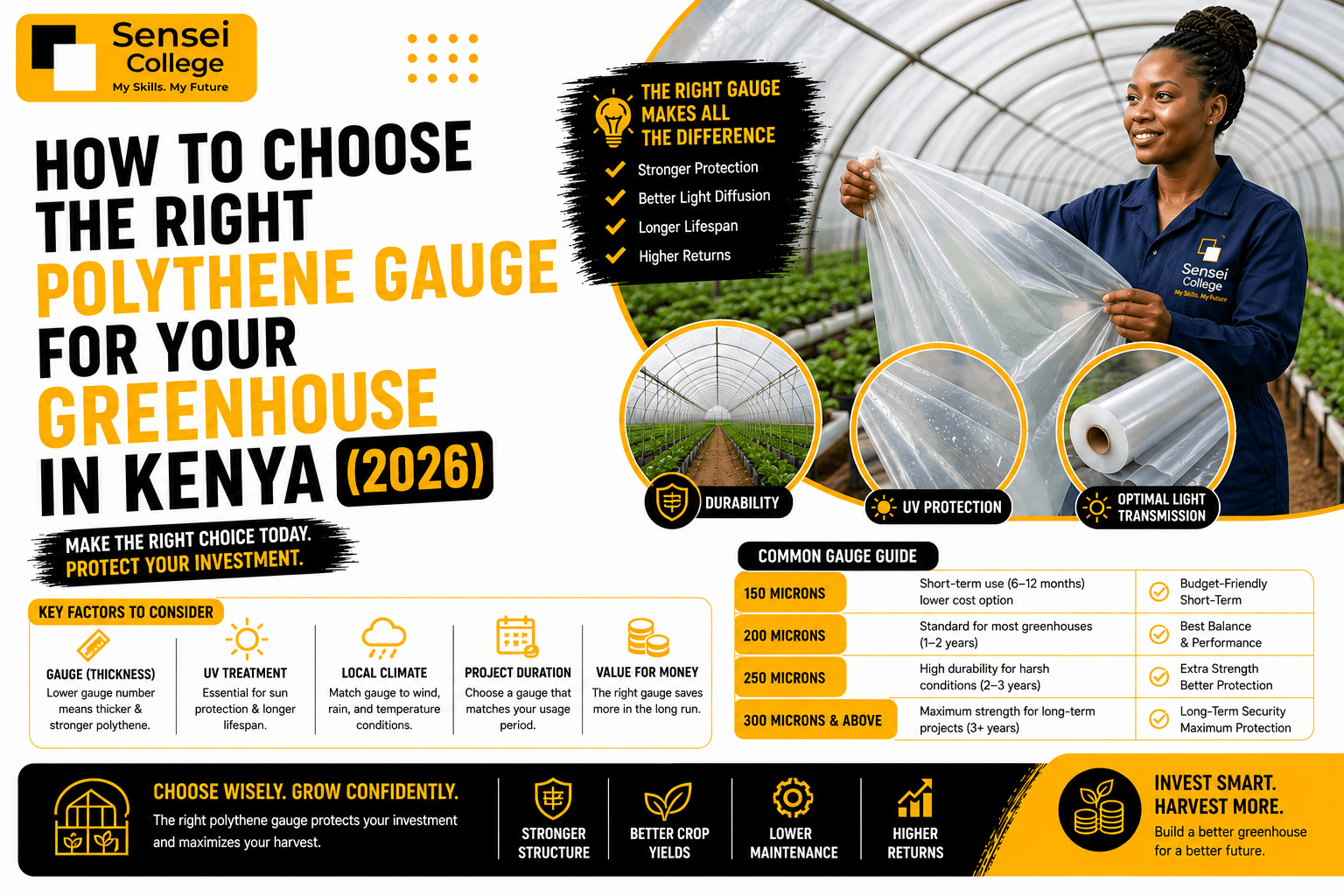
Building or upgrading a greenhouse in Kenya involves the polythene cover you select, which has more impact on your long-term success than anything else. Get it right, and you create a growing environment that is stable and efficient, get it wrong, and you face premature material failure, inconsistent crop growth, and unexpected costs that eat into your margins.
In this article, we explore greenhouse polythene gauges, what they are, why UV resistance is critical in Kenya’s high-radiation environment, which thicknesses suit which applications, and how to make a cost-effective choice.
Whether you are setting up your first greenhouse in Naivasha or upgrading a tunnel in Meru, this guide will help you spend smarter and grow better.
What Is Greenhouse Polythene?
Greenhouse polythene is a flexible plastic sheet made from polyethylene engineered to a much higher standard for agricultural use. It is the primary cladding material used to cover the roof and, in many designs, the side walls of a greenhouse structure.
Its purpose is to:
- Trap solar heat to maintain a warm growing environment
- Allow sufficient light transmission for photosynthesis
- Protect crops from rain, wind, pests, and harsh weather
- Reduce evaporation from the soil
What Does “Gauge” Mean?
Gauge refers to the thickness of the polythene film. In Kenya and most of East Africa, gauge is typically expressed as a number that corresponds to the thickness in one micron, being one-thousandth of a millimetre.
Here is the simple conversion to keep in mind:
200 gauge = 50 microns
800 gauge = 200 microns
Divide the gauge number by 4 to get thickness in microns
The most commonly used polythene gauges for greenhouses in Kenya are:
| Gauge | Thickness (Microns) | Common Use |
| 200 gauge | 50 µm | Seedling tunnels, short-term covers |
| 400 gauge | 100 µm | Low-cost temporary greenhouses |
| 600 gauge | 150 µm | Semi-permanent smallholder greenhouses |
| 800 gauge | 200 µm | Standard commercial greenhouses |
| 1000 gauge | 250 µm | High-durability permanent structures |
| 1200 gauge | 300 µm | Heavy-duty commercial use, windy areas |
What Is UV Resistance and its importance in Kenya?
UV resistance refers to the polythene film’s ability to withstand degradation caused by ultraviolet (UV) radiation from the sun.
Standard, untreated polyethylene begins to break down rapidly when exposed to sunlight within months; it becomes brittle, discoloured, and full of tiny cracks that reduce light transmission and eventually tear.
Kenya sits almost exactly on the equator, thus receiving high levels of UV radiation in the world significantly more intense than greenhouse farmers in Europe, North America, or even South Africa. A polythene film that might last 4–5 years in the Netherlands could degrade and fail in under 12 months in Naivasha if it is not UV-stabilized.
UV-stabilized greenhouse polythene contains chemical additives, most commonly Hindered Amine Light Stabilizers (HALS)that absorb and neutralize UV radiation before it can break down the polymer chains in the plastic. These additives are what give quality greenhouse films their longevity and are the single most important technical specification to check before purchasing.
Benefits of Choosing the Right Polythene Gauge
1. Longevity and Cost Efficiency
A quality 800-gauge UV-stabilized polythene film, properly installed, should last 3–5 years in most Kenyan conditions. A cheap, non-UV-stabilised film may fail within 6–12 months, requiring full replacement, which means additional material costs, labour costs, crop disruption, and structural stress from re-covering.
Over a 5-year period, a farmer who buys a quality film once typically spends 40–60% less than a farmer who replaces a cheap film every year.
2. Consistent Light Transmission for Healthy Crops
As polythene degrades under UV radiation, it becomes cloudy and yellowed. This is called photo-oxidation. A yellowed, degraded film transmits less usable light to your crops, reducing the rate of photosynthesis and ultimately limiting growth and yield. Quality UV-stabilized films maintain 80–90% light transmission throughout their service life.
3. Temperature Stability
Thicker, high-quality polythene provides better thermal retention, holding warmth inside the greenhouse at night without blocking the sun’s energy during the day. This is especially valuable in high-altitude growing areas like Nyandarua, Nyeri, and Meru highlands, where nights can drop to near 10°C.
4. Better Diffusion of Light
Premium greenhouse films often include light diffusion technology, microscopic particles embedded in the film that scatter incoming sunlight evenly throughout the greenhouse interior. Diffused light reaches lower leaves and shaded parts of the plant canopy, improving overall photosynthesis and reducing hotspots that burn tender plant tissue.
5. Reduced Disease Pressure
Some advanced polythene films include anti-condensation (anti-drip) additives that cause water droplets forming on the inside of the film to run down the walls rather than drip onto plants. Water dripping onto foliage is a key trigger for fungal diseases like Botrytis and early blight. Anti-drip films directly reduce this risk with no additional management required.
6. Structural Integrity in Harsh Conditions
Thicker gauges (800–1200) resist tearing from wind pressure, hail, and the physical stress of installation. In areas prone to strong winds, such as parts of the Rift Valley, the coast, or high-altitude exposed sites, a thicker film is not a luxury but a structural necessity.
Guidelines to consider when choosing the right polythene gauge
i). Seedling nursery tunnels
Recommended: 200–400 gauge (50–100 µm)
These structures are used for short periods and at lower heights. A moderate UV rating (12–18 months) is sufficient since the film is replaced frequently anyway.
ii). Smallholder Permanent Greenhouses
Recommended: 600–800 gauge (150–200 µm), UV-stabilized for 3+ years. This is the most common category for Kenyan smallholder greenhouse farming (typically 8m × 15m to 8m × 30m structures). The 800-gauge UV-stabilized film hits the sweet spot of cost, durability, and light performance.
iii). Commercial Multi-Span Greenhouses
Recommended: 800–1200 gauge (200–300 µm), UV-stabilized for 5+ years, with anti-drip and diffusion features. Larger structures carry more risk if the film fails, and the cost of re-covering a multi-span greenhouse is high. Invest in the best quality film available. The additional cost per square metre is small compared to the total farm investment.
iv). High-Altitude or High-Wind Areas
Recommended: 800–1000 gauge with wind-load rated specifications In exposed highland areas above 2,000 m (Kinangop, Nyandarua, parts of Meru), look for films specifically rated for high-wind conditions.
Best Practices of Polythene Selection and Installation
In a kenyan conditions:
-
Always Verify the UV Stabilization Rating
Do not rely on packaging claims alone. Reputable greenhouse polythene suppliers in Kenya will provide a documented UV warranty typically expressed in years (e.g., “24-month UV guarantee” or “5-year UV guarantee”). Always ask for this in writing.
-
Buy from Reputable Suppliers
The Kenyan market has seen an influx of cheap, unbranded polythene that looks similar to quality film but contains little or no UV stabilizer. These counterfeit or substandard films fail quickly and represent very poor value. Buy from established agricultural suppliers with verifiable product documentation.
-
Install with Minimal Tension During Cool Hours
Polythene expands in heat and contracts in cold. Install your film in the early morning or evening when temperatures are cooler. This prevents the film from being installed too tightly, which causes tearing when temperatures rise or too loosely, which causes excessive flapping and wear.
-
Protect the Film from Sharp Edges
Every point where the polythene contacts a sharp metal edge or rough weld is a potential tear initiation site. Wrap exposed metal framework in foam padding or use protective tape at all contact points before laying the film.
-
Overlap Joints Correctly
Where two sheets of polythene meet (at the ridge or side walls), overlap them by at least 30 cm and secure with a proper locking channel system, also called a spring wire channel or wiggle wire, rather than staples or standard tape, which degrade quickly under UV exposure.
Common Mistakes to Avoid
Buying on Price Alone
The cheapest polythene in the market is almost always the most expensive choice in the long run. A film that costs KES 30 per m² but lasts only 8 months costs you far more over 5 years than a film at KES 60 per m² that lasts 5 years, avoiding repeated crop disruption from re-covering.
Using the Same Film Grade for the Roof and Side Walls
The roof receives far more UV radiation and mechanical stress than the side walls. Use your highest-quality UV-stabilized film for the roof and a slightly lighter grade for side wall cladding. This optimizes your budget without compromising where it matters most.
Ignoring the Anti-Drip Feature
Particularly for tomato and rose growers, condensation dripping from the roof onto foliage is a significant disease risk. If your budget allows only one premium feature beyond UV stabilization, choose anti-drip polythene for the roof.
Failing to Clean the Film Regularly
Dust, organic debris, and algae accumulate on polythene over time, reducing light transmission by up to 15–20%. Gently wash the outside of your greenhouse film with clean water and a soft brush or cloth at least twice per year before each major planting cycle if possible.
Patching Tears with Standard Adhesive Tape
Regular adhesive tape does not bond well to polythene, especially in the heat, and fails within days or weeks. Use UV-resistant polythene repair tape (available from agricultural suppliers) for any tears. For large tears, replacement is more cost-effective than patching.
Frequently Asked Questions (FAQs)
1. What is the best polythene gauge for a greenhouse in Kenya?
For most permanent smallholder and commercial greenhouses in Kenya, 800-gauge (200 micron) UV-stabilized polythene is the recommended standard. It provides the optimal balance of durability, light transmission, and cost. Always ensure the film has a documented UV warranty of at least 3 years. For high-altitude or high-wind areas, upgrade to 1000-gauge. For seedling tunnels used seasonally, 400-gauge is sufficient.
2. How long does UV-stabilized greenhouse polythene last in Kenya?
A quality UV-stabilized 800-gauge polythene film, properly installed and maintained, should last 3 to 5 years in most Kenyan conditions. In extreme UV environments (near the equator at low altitude, such as coastal areas or the Rift Valley floor), expect the lower end of this range. In highland areas above 1,500 m, the cooler temperatures and slightly lower UV intensity may allow films to exceed 5 years of service life.
Conclusion: Build Your Greenhouse on a Foundation of Quality Choices
The polythene film covering your greenhouse is one of the most critical structural decisions you will make, as it directly influences the performance and longevity of your entire setup.
A high-quality, UV-stabilized polythene film protects crops from harmful radiation, regulates internal temperatures, and enhances light diffusion for better plant growth. It also improves durability, reducing frequent replacements and maintenance costs, ultimately safeguarding your investment while creating a stable and productive growing environment.