
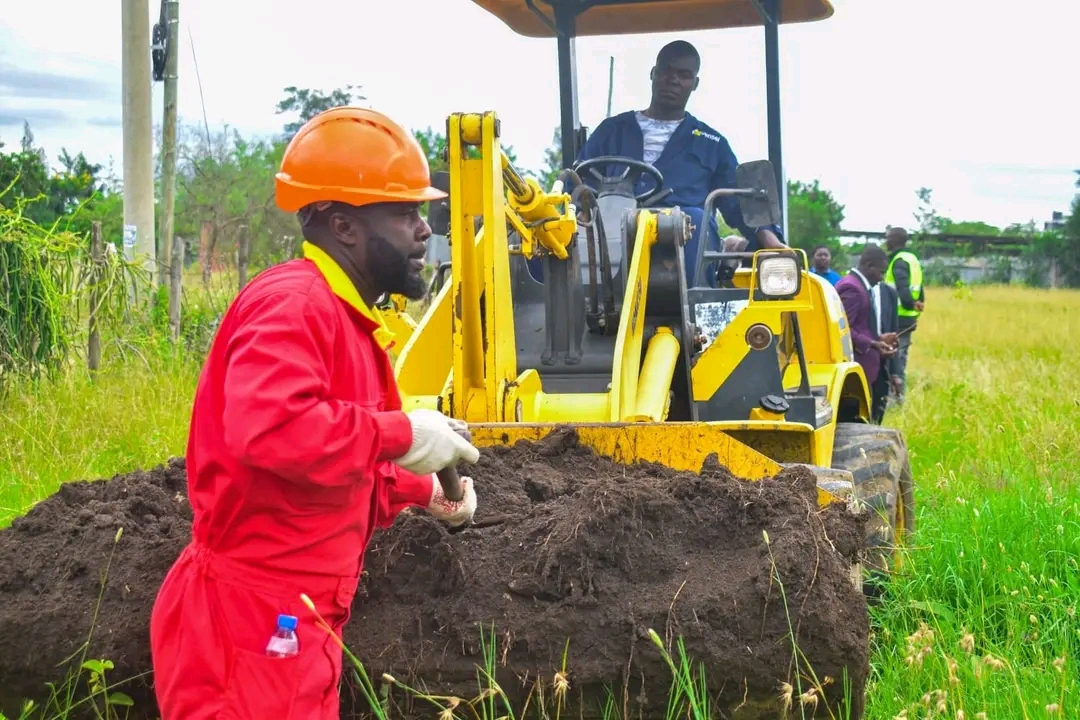
Kenya is building at full speed. Roads, dams, housing projects, and mining sites that require skilled professionals to operate heavy machinery, and right now, employers are struggling to find enough trained operators.
A plant operator course could be your fastest path to a stable, well-paying career. Whether you just finished secondary school or you’re looking for a practical career change without a university degree, this guide will walk you through everything you need to know, from training and fees to salaries and job opportunities.
What Is a Plant Operator?
A plant operator is a professional trained to operate large machines used in construction, mining, and road projects.
These machines require skill, precision, and proper training, which is why certified operators are always in high demand.
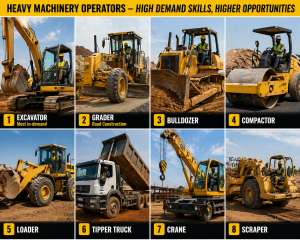
Machines that a plant operator works with:
- Excavator (most in-demand)
- Grader (road construction)
- Bulldozer
- Compactor
- Loader
- Tipper truck
- Crane
- Scraper
Operators who can run multiple types of machines are far more employable than those who know only one. Sensei College trains students on up to 11 different machines, which is a major advantage in the job market.
Why Choose a Plant Operator Career in Kenya?
1. High Job Demand
Kenya’s Vision 2030 development agenda and ongoing government infrastructure projects, from standard gauge railway expansions to new roads, dams, and housing estates, are creating thousands of jobs for heavy equipment operators every year. Counties are investing in construction, and Chinese and European contractors operating in the country actively look for locally certified plant operators.
2. No University Degree Required
You can start with just a KCSE certificate. Skills matter more than academic qualifications.
3. Strong Career Growth
Start as a trainee operator
Become a full operator in 1–3 years
Grow into a supervisor or site manager
Work internationally (Gulf countries, Africa, etc.)
Sensei College – Plant Operator Course
Sensei College offers a comprehensive plant operator course that stands out because of the number of machines students get to train on.
Instead of focusing on just one or two machines, their programme covers a wide range of heavy equipment, giving graduates a real competitive edge.
What does Plant Operator Sensei course cover?
- Excavator training -including digging, trenching and loading techniques.
- Grader operator course -road levelling and drainage work.
- Bulldozer, compactor, loader and scrapper operations
- Safety procedures and site regulations.
- Basic machine maintenance and pre-operation works.
- Theory lessons covering hydraulics, engine basics and site communication.
Fees for plant operator course in Kenya vary depending on the number of machines covered and the duration of training. For more accurate and up-to-date Sensei college fees, contact the college directly or visit their official website.
Prices typically range from KSH 50,000 to 150,000 for comprehensive programmes, but confirm directly before enrolling.
Steps to Become a Plant Operator in Kenya
Step 1: Meet Entry Requirements
KCSE certificate (any grade)
Minimum age: 18 years
Physically fit
Driving license (optional but helpful)
Step 2: Choose a Training Institution
Pick a college with:
Real machines for practice
Qualified instructors
Recognized certification
Step 3: Complete Training
Duration: 3–6 months
Includes theory + practical work
Step 4: Get Certified
Ensure your certificate is recognized by:
NITA (National Industrial Training Authority)
NCA (National Construction Authority)
Step 5: Apply for Jobs
Start with:
Construction companies
Road contractors
Quarry sites
Even assistant roles help you gain experience.
Benefits of Training on Multiple Machines
One of the biggest decisions you’ll make while choosing a plant operator course in Kenya is how many machines you are willing to learn
More job opportunities
Employers prefer operators who can handle different machines on-site. Multi-skilled operators get hired faster.
1. Higher earning potential
An operator who can run both a grader and an excavator can negotiate a better salary than someone with only one skill.
2. Better job security
If one machine is not needed on a project, you can switch to another and continue working.
3. Faster career growth
Supervisors and senior operators usually have experience across multiple machines.
Access to international jobs
Employers in places like the Gulf, South Sudan, and Tanzania prefer operators with multiple machine skills.
Choosing a course that covers multiple machines can change your career path significantly.
Most In-Demand Skills in Kenya in 2026
1. Excavator Operation
Excavator training in Kenya is the most sought-after skill in the construction sector right now. They are used in nearly every type of project, from housing foundations and road trenching to dam construction and quarry work.
Most employers rank excavator experience as their number one requirement when hiring plant operators.
2. Grader Operation
Graders are used to level and shape road surfaces, and skilled grader operators are always needed on road projects funded by KeRRA, KURA, and county governments.
Kenya’s ongoing road construction programme makes grader operator courses extremely valuable.
3. Bulldozer and Compactor
For earthmoving and road compaction projects, bulldozers and compactors are essential.
Operators with bulldozer or compactor certification are in steady demand across quarries, road construction firms, and large real estate developments.
If you’re just starting out and can only train one machine, first start with the excavator.
It’s the machine that will get you hired fastest in Kenya’s current market. Then add grader training to increase your earning power significantly.
Operators that can be paired
When you are unsure on which plant operator machines to train on, this guide provides a reliable reference to help you make a well-informed decision based on industry demand and practical job opportunities.
- Excavator and grader -They work well together because the excavator handles digging, trenching, and loading while the grader is used for levelling and finishing surfaces, making this combination highly effective for both the beginning and final stages of construction projects.
- Excavator and bulldozer– They complement each other as the excavator provides precise digging while the bulldozer is used for pushing and clearing large areas, making them ideal for earthmoving and site preparation.
- Grader and compactor -They work together effectively because the grader shapes and levels road surfaces while the compactor strengthens and compresses them, which is essential in road construction.
- Loader and excavator -They are a strong combination since the loader handles material movement and transport while the excavator focuses on digging and heavy lifting, making them common in quarries and construction sites.
- Bulldozer and compactor -They pair well together because the bulldozer spreads and levels soil while the compactor compresses it, making them suitable for foundation and road base work.
- Excavator and tipper truck -They form a practical combination where the excavator loads materials and the tipper truck transports them efficiently across construction sites.
Plant Operator Salary in Kenya in 2026
| Experience Level | Monthly Salary (KSh) | Description |
|---|---|---|
| Trainee | 25,000 – 45,000 | Entry level |
| Junior (1–2 yrs) | 45,000 – 70,000 | 1–2 machines |
| Mid-level (3–5 yrs) | 70,000 – 100,000 | Multi-skilled |
| Senior (5+ yrs) | 100,000 – 150,000+ | Experienced |
| International Jobs | 150,000 – 250,000+ | High-paying roles |
What Affects Salary?
- Number of machines you can operate — versatility always earns more
- Type of employer — international contractors pay more than local small firms
- Location of the project — remote or difficult sites often pay higher allowances
- Your certification level — NITA-certified operators command premium pay
- Years of experience — every year of proven work increases your negotiating power
Frequently Asked Questions (FAQs)
1. How much does a plant operator course cost in Kenya?
The cost of a plant operator course in Kenya varies depending on the institution and the number of machines covered. Generally, they range between KSh 50,000 and KSh 150,000 for a comprehensive programme.
For Sensei College fees specifically, contact them directly or visit their website to get the most current pricing for their 2026 intake.
2. How long does it take to become a plant operator in Kenya?
Most plant operator training programmes in Kenya take between 3 and 6 months to complete, which includes both classroom theory and practical hands-on time on real machines.
After completing training and receiving your certificate, you are ready to apply for entry-level operator positions.
3. Is plant operation a good career in Kenya?
Yes, plant operation is one of the most practical and well-paying trade careers available in Kenya right now. With major infrastructure projects ongoing across the country, demand for certified operators is high and growing.
The career also offers clear growth paths, with experienced operators earning over KSh 100,000 per month and opportunities to work internationally.
4. Which machine is best to learn first?
The excavator is widely considered the best starting point for new plant operators in Kenya. It is the most commonly used heavy machine on construction sites, so excavator-certified operators get hired fastest.
Once you have excavator experience, adding grader training is highly recommended as it significantly boosts your earning potential.
5. Do I need a driving licence to do a plant operator course?
Most training institutions, including Sensei College, do not require a driving licence as a strict entry requirement. However, having a valid driving licence especially Class BCE (which covers heavy vehicles), is a significant advantage when applying for jobs.
Some employers will require it before hiring you on their sites.
6. Is Sensei College recognised for plant operator training?
Yes! Sensei College has built a strong reputation in Kenya’s construction training sector. It is advisable to verify that their certificates are recognised by relevant bodies such as the National Industrial Training Authority (NITA) or the National Construction Authority (NCA).
Ask the college directly about accreditation before enrolling.
Conclusion
Construction in Kenya is growing fast, and skilled plant operators are in high demand. If you want a career that pays well, doesn’t require a degree, and offers real growth opportunities, Sensei College is the place you can start.