
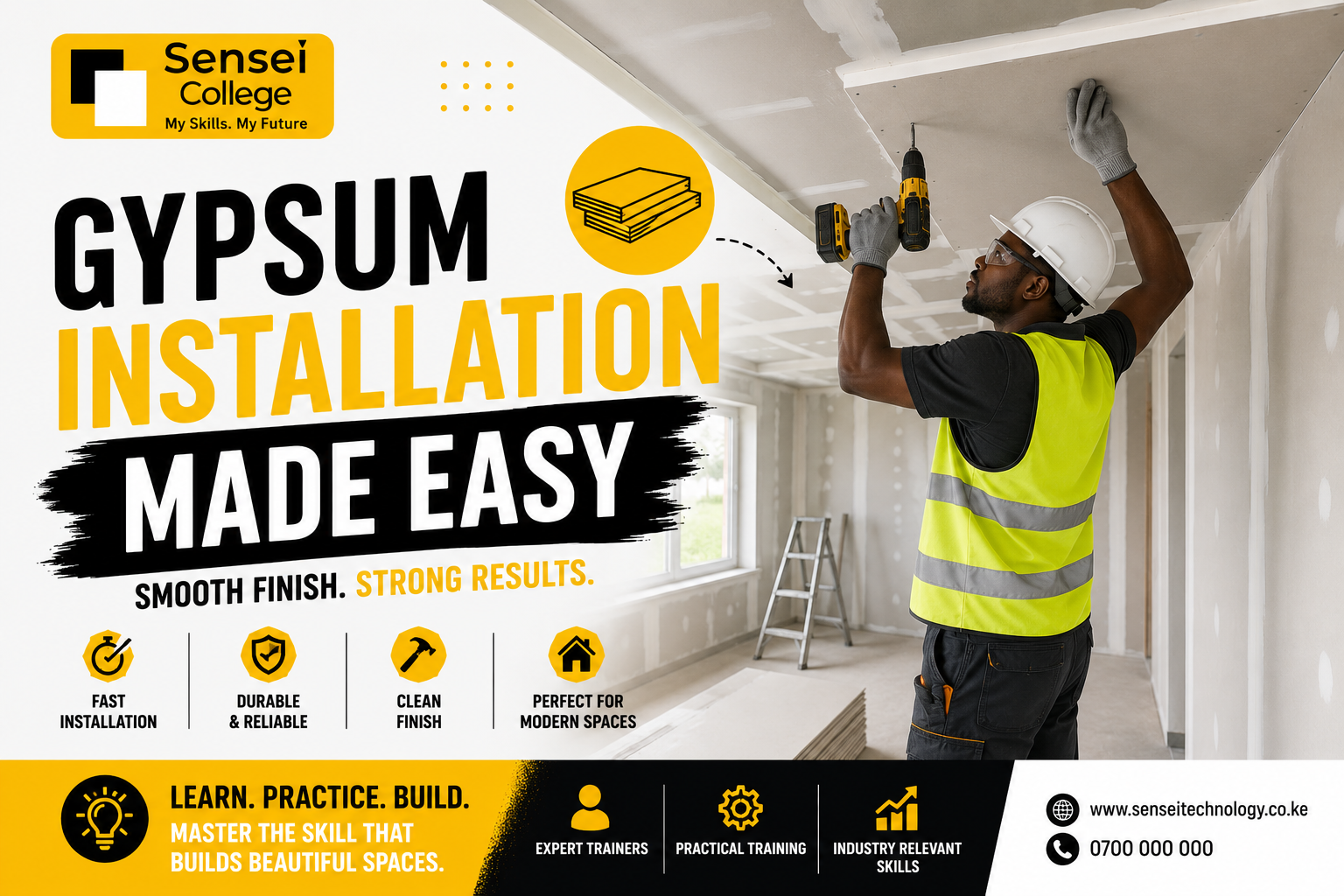
Gypsum installation has become a cornerstone of modern construction, offering a fast, clean, and cost-effective way to create smooth walls and ceilings. Whether in residential homes, offices, or commercial spaces, gypsum boards provide both aesthetic appeal and functional benefits such as insulation and fire resistance. Understanding how gypsum is installed is essential for anyone looking to achieve durable, high-quality interior finishes.
In this article, we will look at everything you need to know about gypsum installation. You will learn the tools used, the steps involved, and how to achieve a neat and durable finish.
Global Trends associated with gypsum installation
- Suspended gypsum ceilings with integrated lighting systems
- Decorative cornices and ceiling roses that add classical elegance
- Gypsum board partitions create flexible office layouts
- Textured accent walls using specialized finishing plasters
- Arched doorways and custom niches built from gypsum and metal framing
None of this happens by accident, and none of it happens without trained installers and designers who know how to make the vision a reality.
What Interior Design Involves
Interior design is the art and science of organizing and enhancing a space to make it both functional and beautiful.
It involves:
- Understanding how light (natural and artificial) moves through a space and how to design around it
- Selecting materials, finishes, and colour palettes that work together
- Planning furniture layouts and spatial flow so rooms feel spacious and intuitive
- Creating mood boards and design proposals that clients can visualize before work begins
- Coordinating with other trades: electricians, plumbers, painters, to ensure the design vision is executed correctly
What Gypsum Installation Involves
Gypsum board (commonly known as drywall or plasterboard) is the primary material used in modern interior construction. It is lightweight, fire-resistant, sound-absorbing, and easy to finish, thus replacing traditional brick and plaster in most interior applications. Gypsum installation work includes:
- Suspended ceiling systems – Metal framing installed below the structural slab, then clad with gypsum board and finished smooth. This is where lighting, air conditioning vents, and decorative elements are incorporated.
- Partition walls – Non-load-bearing walls built from metal studs and gypsum boards to divide open spaces into rooms or zones.
- Bulkheads and coves – Decorative dropped sections of ceiling that frame rooms, hide pipes and ducts, or create dramatic lighting effects.
- Cornices and decorative mouldings – Applied along the junction between walls and ceilings to add a finishing touch.
- Skim coating and surface finishing – Applying thin layers of jointing compound to create seamlessly smooth, paint-ready surfaces.
Application area of gypsum installation
1). Residential developers building mid-range and luxury apartment blocks need interior fit-out teams who can move efficiently from one unit to the next, delivering consistent quality at speed.
2). Commercial property developers constructing office parks, co-working spaces, and retail centres require partition systems, custom ceilings, and branded interior environments that reflect the tenant’s identity.
3). The hospitality industry – hotels, restaurants, lodges, and event venues, constantly renovates and refreshes interiors to stay competitive. This creates ongoing work for skilled interior specialists.
4). Individual homeowners are a massive and underserved market. Many Kenyans who build or buy homes lack access to affordable, professional interior design services. A trained designer who can offer practical, budget-conscious solutions to middle-income homeowners has an enormous potential client base.
5). Architects and quantity surveyors regularly subcontract interior specialists on major projects, creating opportunities for skilled freelancers to work on prestigious developments.
Gypsum Installation Core Principles
-
Ceiling Design and Installation
This is the technical heart of gypsum work. Students learn to read architectural drawings, calculate material quantities, erect metal framework systems, and install gypsum boards to a flush, perfectly level finish. Decorative ceiling features: coffers, circles, arches, and coves are practised until students can execute them with confidence.
-
Partitioning Systems
Speed and precision matter when building gypsum partitions. Students learn how to erect metal stud frameworks, incorporate doorframes, install acoustic insulation, and apply boards in a sequence that minimizes waste and maximizes structural integrity.
-
Decorative Finishes and Special Effects
This is where artistry enters the training. Venetian plaster effects, textured wall finishes, decorative cornices, and custom-moulded features are techniques that set a skilled artisan apart from a basic installer. These finishes command premium pricing from clients.
-
Space Planning Fundamentals
Even if students go on to specialize in gypsum installation, understanding the principles of space planning, traffic flow, scale, proportion, and function makes them more valuable collaborators on design projects.
Students learn the full range of gypsum products, metal framing systems, adhesives, and finishing compounds available in the Kenyan market, as well as how to cost a job accurately so they can provide competitive and profitable quotes.
Price ranges for gypsum installation
Here is a picture of income potential in this field:
- A single suspended ceiling installation in a standard room: Ksh 8,000 – 25,000, depending on complexity
- Full interior partitioning of a two-bedroom apartment: Ksh 30,000 – 80,000
- A bespoke decorative ceiling feature for a restaurant or hotel lobby: Ksh 50,000 – 200,000+
- An interior design consultation and concept package for a home: Ksh 15,000 – 60,000
- Ongoing contracts with a property developer: Monthly retainer of Ksh 20,000 – 80,000
Freelancers who build strong portfolios and client relationships in this space often out-earn their formally employed peers within two to three years of completing training.
Habits of a Highly Successful Interior and Gypsum Professionals
- Stay visually educated. Follow interior design accounts on Instagram and Pinterest. Visit showrooms. Walk through newly completed hotels and offices with a designer’s eye. Your creativity feeds on what you expose yourself to.
- Document everything. Build a portfolio from your very first training project. High-quality photos of your work are your most powerful marketing tool.
- Learn to communicate with clients. Managing expectations, explaining timelines, and presenting ideas clearly are skills as important as the technical work itself.
- Invest in quality tools. Cheap tools produce inconsistent results. As income grows, reinvest in professional-grade equipment.
- Network within the construction ecosystem. Architects, contractors, and property agents are your referral pipeline. Being known and trusted in these circles is worth more than any advertisement.
Frequently Asked Questions
1. What are the main types of gypsum boards?
Not all boards are created equal. Choosing the right one depends on the environment:
- Standard (White/Grey): Used for general walls and ceilings in dry areas.
- Moisture-Resistant (Green): Contains water-repellent additives; ideal for kitchens and bathrooms.
- Fire-Rated (Pink/Red): Reinforced with glass fibres to provide higher resistance to heat and flames.
- Acoustic (Purple/Blue): Designed for superior sound dampening between rooms.
2. Can I install gypsum directly over a masonry wall?
Yes, this is often called “dot and dab.” Instead of a metal frame, specialized adhesive “dabs” are applied to the wall, and the board is pressed directly onto it. It’s a great way to get a smooth finish on uneven brick or stone walls without losing too much floor space.
3. What is the standard spacing for the metal framing?
To ensure structural integrity and prevent sagging:
- Walls: Studs are typically spaced 400mm to 600mm apart.
- Ceilings: Spacing is usually tighter, often at 400mm, to support the weight of the boards against gravity.
4. How do I achieve a seamless finish?
The “magic” happens during the Taping and Jointing phase:
- Tape: Apply fibre mesh or paper tape over the joints.
- Joint Compound: Apply at least two to three coats of “filler,” sanding lightly between each.
- Feathering: Spread the compound wider with each coat to “blend” the bump into the rest of the wall.
Conclusion
Interior design and gypsum installation courses at Sensei College give you both the creative vocabulary and the technical competency to operate confidently in this exciting, growing field.
Whether your goal is to work with a leading design firm, start your own interior fit-out business, or specialize in decorative finishes for the high-end residential market, the foundation is the same: quality training, hands-on practice, and the courage to begin.
Your most creative career is one decision away. Enroll at Sensei College, and start building beautiful things.