
One of the most common questions students ask when enrolling at a technical institution is: Should I study mechanics or an electrical course?
Both are excellent career paths with real job opportunities, good salaries, and global demand. But they are very different in terms of what you do every day, the tools you use, and the type of person who thrives in each field.
This article breaks down both careers clearly so you can make an informed decision.
Who is a mechanic and what does he do?
A mechanic with engines, machines, and mechanical systems.
Common tasks include:
- Diagnosing and repairing engine problems
- Servicing vehicles (oil changes, brake replacement, tyre rotation)
- Operating and maintaining heavy machinery (excavators, graders, forklifts)
- Repairing gearboxes, transmissions, and drivetrains
- Fabricating or fitting mechanical components
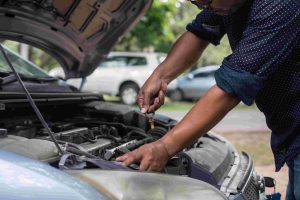
Mechanics work in garages, construction sites, factories, mines, farms, and transportation companies. Their work is often physical and hands-on.
Who is an Electrician and what does he do?
- Install and wire electrical systems in homes, offices, and factories
- Repair electrical faults and breakdowns
- Read and interpret electrical diagrams and blueprints
- Install solar panels, security systems, and data cabling
- Test electrical systems for safety compliance
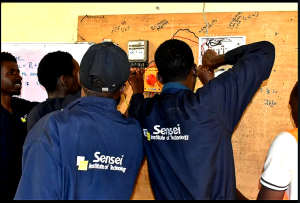
Electricians work in construction, real estate, manufacturing, telecommunications, and the growing renewable energy sector.
Their work requires strong attention to detail and a good understanding of electrical theory.
Comparison Between A Mechanic and an Electrician
| Factor | Mechanic | Electrician |
| Training Duration | 6 months – 2 years | 6 months – 2 years |
| Key Skills | Problem-solving, physical strength, and mechanical aptitude | Precision, electrical theory, attention to detail |
| Work Environment | Outdoors/garages/sites | Indoors/outdoors/varied |
| Starting Salary (Kenya) | KES 25,000 – 45,000 | KES 25,000 – 50,000 |
| Experienced Salary (Kenya) | KES 60,000 – 120,000+ | KES 70,000 – 150,000+ |
| International Demand | Very High (Gulf, Australia) | Very High (Global) |
| Self-Employment Potential | High (own garage) | High (electrical contractor) |
| Key Tools | Spanners, jacks, scanners | Testers, drills, wire strippers |
Job Opportunities
1). Mechanic Career Paths
- Automotive mechanic (cars, trucks, PSVs)
- Plant operator (construction machinery)
- Fleet maintenance technician
- Diesel mechanic
- Workshop supervisor or foreman
- Workshop business owner
Choose Mechanics If You:
- Enjoy taking things apart to see how they work
- Like working with your hands on large machines
- Are physically active and do not mind getting your hands dirty
- Are fascinated by cars, trucks, or heavy equipment
- Like problem-solving through trial and error
2). Electrical Career Paths
- Building electrician (wiring homes and commercial properties)
- Industrial electrician (factories and plants)
- Solar PV technician
- Auto-electrician (vehicle electrical systems)
- Instrumentation and control technician
- Electrical contractor (self-employed)
Choose Electrical If You:
- Enjoy working with precision and are detail-oriented
- Are curious about how electricity flows and powers devices
- Like reading diagrams, charts, and technical drawings
- Prefer a career with strong ties to the digital and renewable energy future
- Want to work in a field with high international mobility
Certifications that will make you stand out
A diploma or certificate from Sensei College proves your training.
Specific industry licenses are often required by law to practice:
- Electrical Students: Registration with EPRA (Energy and Petroleum Regulatory Authority). Having an EPRA license (Class C2, C1, etc.) is essential for signing off on electrical installations in Kenya and is a massive booster for your employability.
- Mechanical Students: Specialized certifications like NTSA (National Transport and Safety Authority) inspection training or welding certifications (like coded welding). If you are in heavy machinery, getting a Plant Operator License alongside your mechanic training makes you a dual-threat hire.
Certifications in Occupational Health and Safety (OSH) are universally valued, as every industrial site needs someone who understands how to keep the workplace hazard-free.
Conclusion
Both mechanics and electricians are in high demand in Kenya and globally.
They offer good salaries, self-employment opportunities, and the chance to work internationally. The best choice is not the one with the highest salary or the most prestige; it is the one that matches who you are and what excites you.
Visit Sensei today, talk to experts and graduates in both fields, and make the choice that will set you up for a lifetime of meaningful, well-paid work.
Frequently Asked Questions on Mechanical and Electrical courses
1. What is the primary difference in the day-to-day work between these two courses?
In Mechanical Engineering, you focus on the movement of physical parts: gears, pistons, hydraulics, and engines. You’ll be working with tools like wrenches and lathes to repair or fabricate hardware.
In Electrical Engineering, you focus on the flow of energy and data. Your work involves wiring, circuit boards, motor controls, and power distribution, often using multimeters and diagnostic software to “see” invisible currents.
2. Which course offers better job opportunities in the current market?
Both fields are in high demand, but they serve different industries:
- Mechanical: Leads to roles in automotive repair, plant maintenance, construction machinery, and manufacturing. It is ideal if you want to work with heavy equipment or in the transport sector.
- Electrical: Leads to domestic and industrial wiring, renewable energy (solar installation), telecommunications, and electronics repair.
3. which one is more practical?
At a technical colleges like Sensei, both are 100% practical.
- Mechanical is often more physically demanding and involves “grease and gears.” You will likely be dismantling engines or welding structures.
- Electrical requires high precision and attention to safety protocols. While it is hands-on, the work is often cleaner but requires a stronger grasp of diagrams, symbols, and logical troubleshooting.
4. Can I switch from one to the other later in my career?
There is a middle ground called Mechatronics.
Since modern machinery like a car or a factory robot, uses both mechanical parts and electrical sensors/controllers, having a foundation in one makes it easier to learn the other. However, they are distinct certifications. If you start in Mechanical, you can later take a short course in Electrical and vice versa)to become a “multiskilled” technician, which is highly valued by employers.
5. What are the safety risks associated with each field?
Safety is a priority in both, but the hazards differ:
- Mechanical: Risks include injuries from moving parts, heavy lifting, high-pressure hydraulics, and heat. You’ll focus on PPE like steel-toe boots and overalls.
- Electrical: The primary risk is electrical shock and arc flashes. Safety training focuses heavily on “lock-out, tag-out” procedures, insulation, and working with live versus dead circuits.