
A driving license is not just a document; it is an income multiplier. Here is how different Kenyans are using their licenses to build wealth:
Employment
- Company driver: KSh 25,000 – 60,000/month; NGOs, corporations, government
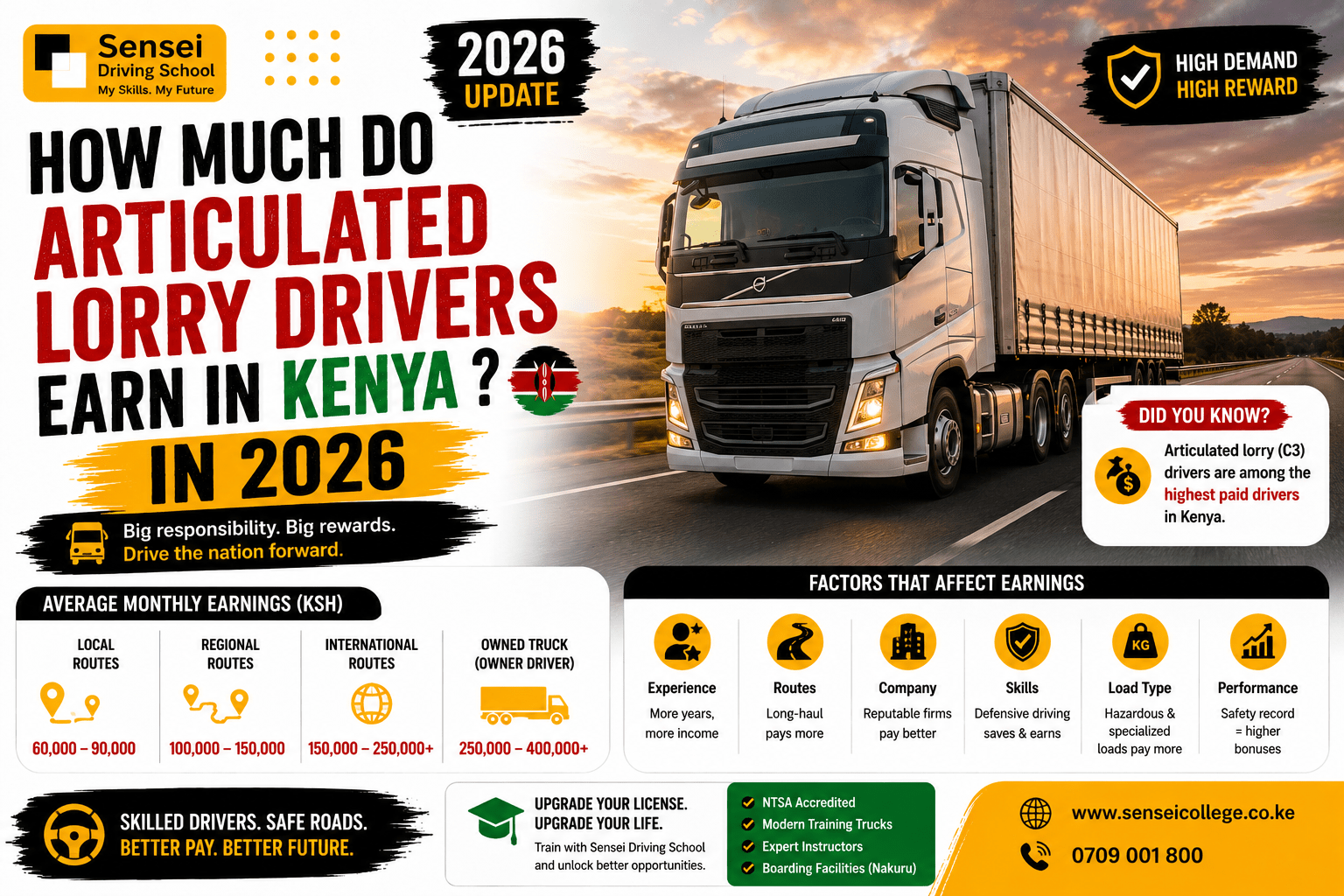
- Truck driver: KSh 40,000 – 200,000/month depending on class and route
- PSV matatu driver: KSh 30,000 – 55,000/month
- Embassy/diplomatic driver: KSh 80,000 – 180,000/month
- Airport taxi driver: KSh 50,000 – 120,000/month
Self-Employment and Business Ideas
- Ride-hailing driver: Register your car on Uber, Bolt, or Little Cab. A decent car can earn KSh 80,000–150,000/month in Nairobi
- School transport contractor: Run a school bus or van route. One route with 30 children at KSh 3,000/month each = KSh 90,000/month gross
- Courier and delivery driver: Partner with Glovo, Jumia, or run your own delivery service
- Driving instructor (self-employed): After gaining 3–5 years of driving experience and completing an instructor certification, charge KSh 3,000–5,000 per student per week
- Truck fleet operator: Start with one truck on hire-purchase, grow to a fleet over 5 years
Diaspora and International Opportunities
A Kenyan driving license can be converted or used as a basis for obtaining a driving license in the UAE, Saudi Arabia, UK, Australia, and other countries. Many Kenyans in the diaspora use their Kenyan driving background as a foundation for international driving careers.
Challenges and How to Overcome Them
1. High Upfront Cost
Driving school fees of KSh 25,000–70,000 are a stretch for many young Kenyans.
Solutions:
- Use Higher Education Loans Board (HELB) for students -HELB loans can cover vocational training
- Approach your employer many companies sponsor license upgrades for employees
- Join a savings chama or SACCO specifically for skill development
- Sensei may offer installment payment plans, ask directly when enrolling
2. Failing the NTSA Test Multiple Times
The NTSA practical test has a significant failure rate among first-time takers.
Solutions:
- Never skip mock tests -Sensei’s mock tests are designed to simulate the real test closely
- Practice the specific maneuvers tested (parallel parking, three-point turn, hill starts)
- Study the Kenya Highway Code thoroughly, many people fail theory for avoidable reasons
3. Limited English Literacy for Theory Classes
Theory materials and road signs are in English, which can be challenging for some learners.
Solutions:
- Sensei instructors can explain concepts in Swahili when needed
- Use illustrated road sign guides (available as cheap booklets near NTSA offices)
- Study in a group, peer learning helps retention
4. Getting a Job After Licensing
Most employers only hire licensed individuals. Enrolling in Sensei College is the first step to getting a job.
Solutions:
- Register on BrighterMonday, Fuzu, and LinkedIn as a licensed driver immediately
- Build your CV around your license class and any specialized training (e.g., defensive driving, B3 certification)
- Network through Sensei’s alumni community
- Start with ride-hailing (Uber/Bolt) as a bridge while looking for employment
Driving Careers in Kenya’s 2026
-
Electric Vehicle Driving Skills
As Kenya’s EV fleet grows with electric matatus, Uber EVs, and e-boda bodas drivers who understand EV operation and charging systems will be preferred. Sensei is expected to integrate EV familiarization into its practical training by 2026.
-
Digital Telematics and Fleet Management
Modern trucks and PSV vehicles are fitted with GPS trackers, speed governors, and driver behavior monitoring systems. Drivers who understand telematics dashboards will stand out to corporate fleet managers.
-
Tourism and Safari Driving
Kenya’s tourism sector, targeting 5 million visitors annually, needs certified safari vehicle drivers. The Kenya Professional Safari Guides Association (KSGA) certification, combined with a Sensei Class D license, opens doors to extremely well-paying tourism driving careers.
-
Cross-Border Long-Haul Driving
East Africa’s growing trade under the AfCFTA agreement means increasing demand for C3-certified drivers on the Northern Corridor (Mombasa–Kampala–Kigali–Kinshasa). Long-haul drivers with C3 licenses and experience in cross-border documentation can earn KSh 150,000–300,000 per month.