
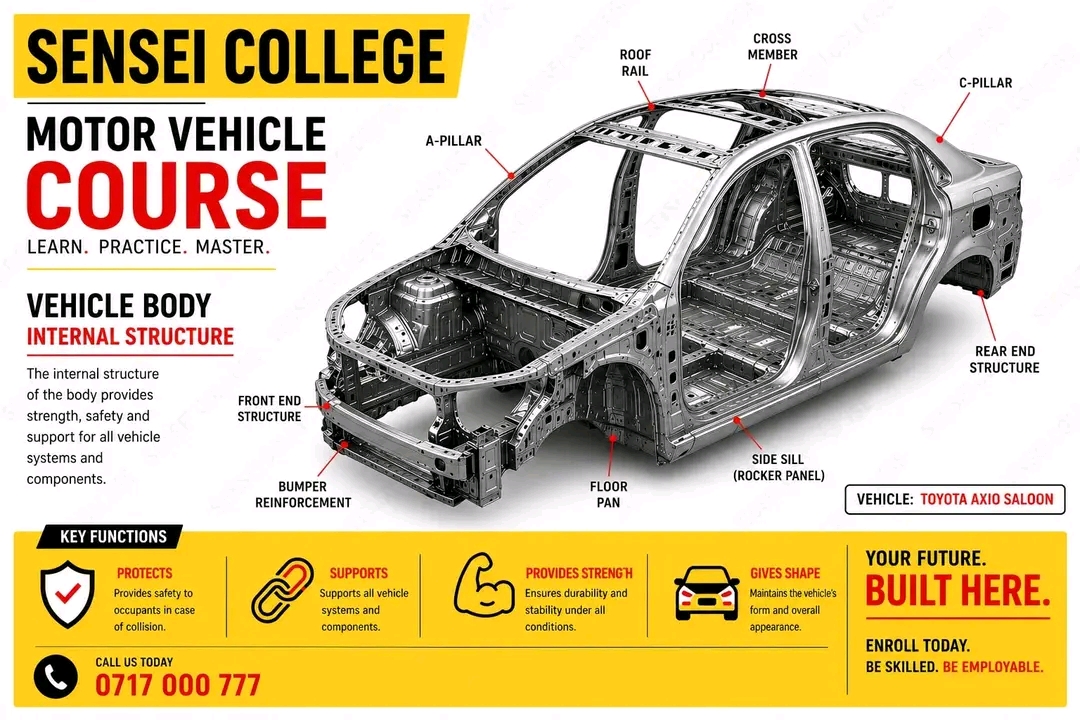
Every day, millions of vehicles move across Kenya’s roads — matatus, trucks, private cars, boda bodas, and lorries. Every single one of those vehicles will, at some point, need a skilled mechanic. Yet despite this enormous demand, there is a serious shortage of qualified, modern-trained mechanics in Kenya.
Whether you are a fresh secondary school leaver, a parent looking for a practical path for your child, or someone already working in a garage who wants formal certification, this is your opportunity
In this article, we cover what motor vehicle mechanics training involves, what Sensei College offers, how your career can grow, the range of your earnings, and how to get started in 2026.
What Is Motor Vehicle Mechanics (MVM)?
Motor Vehicle Mechanics is the study and practice of maintaining, diagnosing, repairing, and servicing all types of motor vehicles. This includes private cars, commercial trucks, matatus, tractors, motorcycles, and more.
A motor vehicle mechanic is the person who keeps Kenya’s transport system running. Their job involves much more than changing tyres or fixing a flat battery. Today’s mechanic must understand engines, gearboxes, suspension systems, braking systems, fuel systems, electrical wiring, and the computer systems inside modern vehicles.
The Difference Between Old-School Repair and Modern Automotive Mechanics
| Aspect | Traditional Mechanic | Modern Mechanic |
| Tools Used | Spanners, hammers, basic hand tools | Diagnostic scanners, computer tools, modern equipment |
| Vehicle Type | Simple mechanical vehicles | Advanced vehicles like Toyota Fielder, Mitsubishi Canter, Isuzu trucks |
| System Knowledge | Mainly mechanical systems | Mechanical systems + electronic control units (ECUs) |
| Fault Diagnosis | Based on experience and manual inspection | Based on computer diagnostics and sensor data |
| Skill Requirement | Practical hands-on mechanical skills | Combined mechanical repair + vehicle diagnostics training |
| Problem Solving | Trial and error methods | Data-driven, electronic fault detection
|
| Demand in the Market | Local garages and small workshops | Garages, transport companies, dealerships, and fleets |
| Career Value | Limited specialization | High-demand, higher earning potential |
| Industry Trend | Mechanical-focused repair | Technology-driven automotive repair |
Motor Vehicle Mechanics at Sensei College
Sensei College has built a strong reputation for producing skilled, work-ready graduates. Their Motor Vehicle Mechanics programme is designed to be practical.
MVM Course outline
The Sensei College mechanics course is structured to take you from the very basics all the way through to advanced diagnostics and electronics. Here is what you can expect to learn:
- Engine overhaul and repair — stripping down an engine, identifying worn or damaged parts, replacing components, and reassembling correctly
- Transmission and gearbox systems — both manual and automatic
- Braking systems — drum brakes, disc brakes, ABS diagnostics
- Suspension and steering — alignment, shock absorbers, steering racks
- Fuel systems — carburettor engines, fuel injection, diesel systems
- Electrical systems — vehicle wiring, alternators, starters, batteries
- Car electronics and diagnostics course content — using OBD scanners, reading fault codes, understanding ECUs and sensors
- Air conditioning systems — refrigerant handling, compressor diagnosis
- Welding and fabrication basics
What sets Sensei College apart is the emphasis on doing rather than just reading. Students work on real vehicles, not diagrams. You will get your hands dirty on actual engines, use professional diagnostic equipment, and develop the muscle memory that only comes from real workshop experience.
The Free Driving Licence Benefit
One of the notable advantages reported by students at Sensei College is access to driving licence training as part of their programme. For a mechanic, being able to test-drive a vehicle after a repair is not a luxury; it is part of the job.
This benefit applies to the current 2026 intake; it represents significant added value.
Certification
Upon completing the MVM programme at Sensei College, graduates receive a recognised certificate. For mechanics in Kenya, the most important certifications to look out for are those recognised by the Kenya National Examinations Council (KNEC) or linked to the National Industrial Training Authority (NITA).
Ask the college specifically about which examination body certifies their graduates, as this affects how employers and overseas clients view your qualification.
Artisan to Master Mechanic: Your Career Progression Path
One of the great advantages of automotive mechanics training in Kenya is that the career has a clear upward path. You do not stay at the bottom forever skill, experience, and ambition will move you forward.
Stage 1: Entry-Level Mechanic
Right after completing your motor vehicle mechanics course in Kenya, you typically start as an artisan mechanic. At this stage, you work under supervision in a garage or workshop, handling routine jobs like oil changes, brake pad replacements, minor electrical faults, and basic servicing. This phase is about building speed, confidence, and a reputation.
Stage 2: Skilled Technician -2–4 Years
After a few years of experience, you become a skilled technician capable of handling engine overhauls, gearbox replacements, and independent diagnostic work. At this level, garages will trust you to work without close supervision and to advise customers on what their vehicles need.
Stage 3: Senior or Master Mechanic – 5+ Years
A master mechanic is the highest technical level. These are the experts other mechanics turn to when a problem is difficult. Master mechanics are highly sought after by dealerships, large transport companies, and international construction firms that run fleets of vehicles.
Stage 4: Supervisor, Garage Manager, or Business Owner
Many skilled mechanics in Kenya eventually move into management roles, running a workshop, managing other technicians, or owning their own garage entirely. The mechanical engineering artisan pathway in Kenya is one of the few trades that naturally lead into entrepreneurship, and many of Kenya’s most successful auto garage owners started.
Why Modern Mechanics Must Learn Electronics and Diagnostics
If you train as a mechanic without learning vehicle electronics and diagnostics, you are preparing for a job market that is already changing.
-
Modern Vehicles Are Computer-Controlled
Any car manufactured in the last 15 years has at least one ECU (Electronic Control Unit), a small computer that controls the engine, gearbox, or other systems. Many modern vehicles have 50 or more ECUs. When something goes wrong, the vehicle stores a fault code. A mechanic with a diagnostic scanner can read that code in minutes and know exactly where to look. A mechanic without that skill will spend hours guessing.
-
The OBD Scanner: The Modern Mechanic’s Most Important Tool
OBD stands for On-Board Diagnostics. Every modern vehicle has an OBD port, usually beneath the dashboard, where a technician can plug in a scanner and pull up a full report on the vehicle’s health. Vehicle diagnostics training in Kenya teaches you how to use these tools, interpret the results, and connect what the computer is telling you to the physical problem in the engine bay.
Why This Gives You a Competitive Edge
Most older mechanics in Kenya learned their trade before electronics were standard. They are excellent at traditional repairs but may struggle with modern Toyota Prados or Volkswagens with complex fault codes.
A young mechanic who graduates from a course like Sensei College’s MVM programme, with both traditional skills and electronics training, will immediately be more hireable and command a higher salary than someone trained in mechanics alone.
The Entrepreneurship Opportunity
For many who train as mechanics in Kenya, the ultimate dream is not just getting a job, but opening their own garage. And this is very achievable.
Good automotive mechanics training does more than teach you to fix cars; it teaches you to understand vehicles at a systems level, communicate with customers about what their vehicle needs, estimate repair costs, source parts efficiently, and build a professional reputation and all skills that a garage owner needs.
What Does It Take to Open a Garage in Kenya?
Starting a small but functional auto repair garage in Kenya does not require a fortune.
You need:
- A suitable space
- Basic professional tools, e.g., spanners, jacks, grease guns, a diagnostic scanner
- A business permit from your county government
- Your mechanics certification for credibility
- Word of mouth from satisfied customers
The garage opening training exposure you get at Sensei College helps you understand what starting and running a business really looks like.
A small garage in a busy Kenyan town can generate between KSh 50,000 and KSh 200,000 or more per month, depending on location, the number of regular clients, and the types of repairs handled.
Specialist garages that handle diagnostics, gearbox rebuilds, or fleet vehicle servicing can earn significantly more. The business potential is real, and the skills you gain during training are your most valuable starting asset.
A Day in the Life of a Sensei College MVM Student
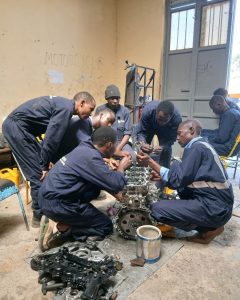
At Sensei College, enrolling in the motor vehicle mechanics course means learning through a fully hands-on, practical approach in a real workshop environment.
Students spend their days working on actual vehicles like Nissan Matatus and Toyota Fielders, carrying out tasks such as dismantling gearboxes, diagnosing engine faults using OBD scanners, and repairing electrical systems under the guidance of an instructor.
Instead of traditional classroom lectures, learning happens through demonstration, practice, and correction on real machines.
By the end of each day, students gain practical experience, problem-solving skills, and confidence, preparing them to enter the workforce as competent, job-ready mechanics.
Career Opportunities and Salary for Mechanics in Kenya (2026)
Where Do Qualified Mechanics Work?
- Private auto garages and workshops
- Vehicle dealerships and authorised service centres (Toyota Kenya, CMC, DT Dobie, etc.)
- Public transport companies and matatu saccos
- County governments and national government vehicle pools
- Construction companies with heavy equipment fleets
- NGOs and international organisations with field vehicles
- The Kenya Defence Forces and National Police Service
- International opportunities in the Gulf states, South Sudan, Tanzania, and beyond
Salary Expectations in Kenya
| Level | Monthly Earnings (KSh) |
| Entry-level artisan (fresh graduate) | 20,000 – 40,000 |
| Skilled technician (2–4 years) | 45,000 – 80,000 |
| Senior mechanic / diagnostic specialist | 80,000 – 130,000 |
| Master mechanic or workshop manager | 120,000 – 200,000+ |
| Garage owner (own business) | Variable – often higher |
| International (Gulf, international NGO) | KSh 150,000 – 300,000+ |
These figures are estimates based on the 2026 Kenya market. Actual salaries vary by employer, location, specialisation, and your own skills.
Mechanic salaries in Kenya rise sharply with experience and technical specialisation. The more you know, particularly in electronics and diagnostics, the more you earn.
Why International Demand Is Real
Kenyan mechanics are increasingly working in South Sudan, Ethiopia, Uganda, the Democratic Republic of Congo, and Gulf countries like Saudi Arabia and the UAE, where construction booms and mining operations create demand for skilled vehicle technicians. A certificate from a recognised institution like Sensei College, combined with practical experience, is enough to qualify one for many of these positions.
Frequently Asked Questions
1. How much does a mechanics course cost in Kenya?
The cost of a motor vehicle mechanics course in Kenya varies by institution and the level of training. At most accredited colleges, you can expect to pay between KSh 40,000 and KSh 120,000 for a comprehensive MVM programme.
For the exact mechanics course fees at Sensei College in 2026, contact them directly as fees may have changed. Some programmes also offer payment plans to make training accessible.
2. How long does it take to become a mechanic in Kenya?
A standard motor vehicle mechanics course in Kenya typically takes between 6 months and 2 years, depending on the level of certification you are working towards. After completing your course, expect to spend another 1–2 years building practical experience before reaching a mid-level technician standard.
3. Is motor vehicle mechanics a good career in Kenya?
Yes, it is one of the most practical and financially rewarding technical careers available to young Kenyans in 2026. The demand for skilled mechanics is not decreasing. In fact, as more vehicles enter Kenya’s roads and as those vehicles become more technologically complex, the demand for qualified, diagnostics-trained mechanics is growing faster than supply.
4. Can I open a garage after completing the MVM course?
Absolutely. Many graduates of automotive mechanics training programmes in Kenya go on to open their own garages, and this is actively encouraged by institutions like Sensei College. You will need a business permit, a suitable workspace, basic tools, and the skills you gain during training.
5. Do I need any prior experience to join the MVM course?
No prior mechanical experience is required. The course is designed to take complete beginners through to competency. If you already have some garage experience, you will simply progress faster through the practical components.
6. What is the difference between NITA and KNEC certification for mechanics?
NITA (National Industrial Training Authority) certification is geared towards technical and trade skills and is widely recognised by employers in Kenya and East Africa. KNEC (Kenya National Examinations Council) certification tends to cover broader artisan and craft programmes. Both are respected. When enrolling at any institution, confirm which body examines and certifies their students, as this directly affects your employability and ability to work internationally.
Conclusion
The road to becoming a skilled motor vehicle mechanic in Kenya has never been clearer and more rewarding. With vehicles on Kenya’s roads numbering in the millions and modern cars becoming increasingly technology-dependent, the country needs a new generation of mechanics who combine traditional hands-on skills with modern diagnostic capability.
Sensei College’s Motor Vehicle Mechanics programme gives you both. You train on real vehicles. You learn engine repair, electrical systems and car electronics and diagnostics. You graduate with a recognised certificate, practical confidence, and the foundation to either walk into employment or eventually build your own business.
Do not wait for a “perfect time” to start, start Today!